
What Are the Top 7 Small Dogs for Families?
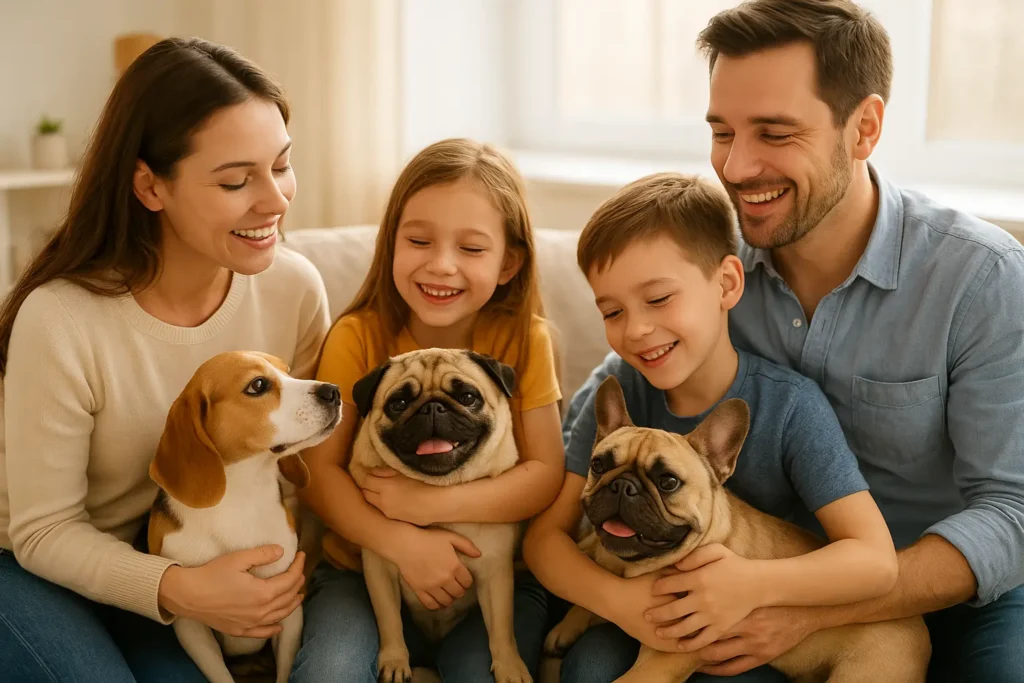
The Happiness of Getting a Perfect Small Dog What if you have happiness in your arms and it’s wiggling up its little tail and looking at you out of its love-filled eyes? This is precisely what will happen as you adopt one of the Top 7 Small Dogs For Families. Such little friends are small in size but full of faithfulness, laughter, and love that make the saddest days sunny. PupzCorner offers a small dog breed that can fit into any lifestyle. They don’t need big backyards or fantastic maintenance; a brisk spanking is all they need, and they will give you a hundred and one years of joy. You are getting ready to get a new small furball? It must be simple to change with our complete line of accessories, including chew toys, feeding bowls, warm blankets, and a leash that fits around a small dog’s neck. And the best part? The 7 Best Small Dogs to Keep in the Family are sociable, accepting, and loving companions for children. Next, we will explore the top 7 small dogs suitable for families, focusing on puppies that are easy to train. For more information, please contact us. Why Choose a Small Dog for Your Family? Here’s why small dog breeds to fit any lifestyle are such a popular family choice: Space-Smart Companions: There’s no need for big gardens. These small companions are space-friendly. Gentle Temperament: Many of the best small dog breeds are wonderful with children and older adults alike. Low Maintenance: Perfect for busy families, these low-maintenance, kid-friendly small dogs are easy to care for and love attention. Playful Personalities: With their joyful spirit, they make ideal playful small dog breeds that keep kids active. The Top 7 Small Dogs for Families (Your Perfect Little Companions) 1. Cocker Spaniel – The Cheerful Family Favorite The Cocker Spaniel belongs to the American Kennel Club’s Sporting Group. They are not too small, not too big, and sturdy, typically weighing between 28 and 32 lbs. With their silky ears, soulful eyes, and flowing coats, they’re as stunning as they are sweet. Personality Highlights: Exceptionally friendly and affectionate Intelligent and eager to please Full of playful energy A great sense of smell was bred initially for hunting Excellent with children and other pets Cocker Spaniels are gentle, loyal, and thrive on companionship. They make excellent additions to homes that enjoy active, loving pets. You can also buy a beautiful leash from PupzCorner that can fit around a small dog’s neck easily. 2. French Bulldog – The Calm and Loyal Companion The French Bulldog, affectionately known as the “Frenchie,” is easily recognized by its bat-like ears and expressive face. These muscular little dogs weigh around 16-28 pounds and come in shades of fawn, white, black, or brindle. Personality Highlights: Friendly and lovely with children Calm and quiet, perfect for apartment life Devoted and loyal to their owners With a bit of care and regular walks, Frenchies stay healthy and happy for up to 14 years. 3. Beagle – The Curious Explorer Beagles are lively members of the AKC Hound Group. Since Beagles love outdoor adventures, keeping them secure yet comfortable is key. Try our Adjustable Comfort Harness for Small Dogs, designed to prevent choking and make daily walks more enjoyable. Known for their curiosity and keen sense of smell, they bring endless fun and love to any household. Physical Traits: Height: 13–15 inches Weight: 20–30 pounds Eye colour: Warm brown Coat: Short, smooth, lemon & white shades Beagles love playtime and family activities, making them one of the Top 7 Small Dogs For Families. With regular grooming and exercise, these Beagles’ characteristics of joyful pups will stay your loyal companions for 12–15 years. 4. Pug – The Hilarious Little Comedian Pugs are part of the AKC Toy Group and known for their charming, wrinkly faces and curled tails. Typically weighing between 14 and 18 pounds, they are the life of any family gathering. Temperament Highlights: Playful and full of personality Gentle and affectionate with children Adaptable to indoor living Pugs can live up to 15 years, spreading laughter and warmth every single day. 5. Bichon Frise – The Fluffy Bundle of Sunshine The Bichon Frise is a soft, white, cotton candy-like pup with bright eyes and a cheerful spirit. Lightweight at just 8–12 pounds, they’re ideal for homes with limited space. Why Families Love Them: Non-shedding and hypoallergenic Sweet-natured and playful Excellent with kids and other pets They are one of the most low-maintenance and kid-friendly small dogs. With a lifespan of 12–15 years, a Bichon Frise brings years of love and cuddles. 6. Shih Tzu – The Regal Family Member Known as the “little lion,” the Shih Tzu exudes elegance with its long, flowing coat and expressive eyes. Small dogs like Shih Tzus adore cozy nap spots. Treat them to the ultimate comfort with the PupzCorner Orthopedic Puppy Bed, supportive, washable, and perfect for tiny paws. These small dogs stand about 8 –11 inches tall and weigh between 9 and 16 pounds. Why Families Adore Them: Calm yet playful personality Extremely affectionate Great with both kids and seniors With proper love and care, a Shih Tzu can live a life of 16 years, proving why it remains one of the Top 7 Small Dogs for Families. 7. Havanese – The Cuban Charm Native to Cuba, the Havanese is known for its silky, wavy coat and joyful spirit. They usually weigh between 7 and 13 pounds, making them perfect lapdogs. What Makes Them Special: Exceptionally friendly and social Highly adaptable to different environments Intelligent and easy to train Deeply loyal and affectionate With proper grooming and nutrition, they live between 14 and 16 years, bringing constant smiles and affection. How to Find the Right Pup for Your Family Here’s a quick guide: Active Families: Choose Beagles or Cocker Spaniels; they love adventure. Calm Households: French Bulldogs and Pugs are well-suited to quieter homes. Busy Parents: Go for low-maintenance kid-friendly small dogs like Bichon
Best Baby Gates for Dogs | Safe & Sturdy Pet Barriers 2025
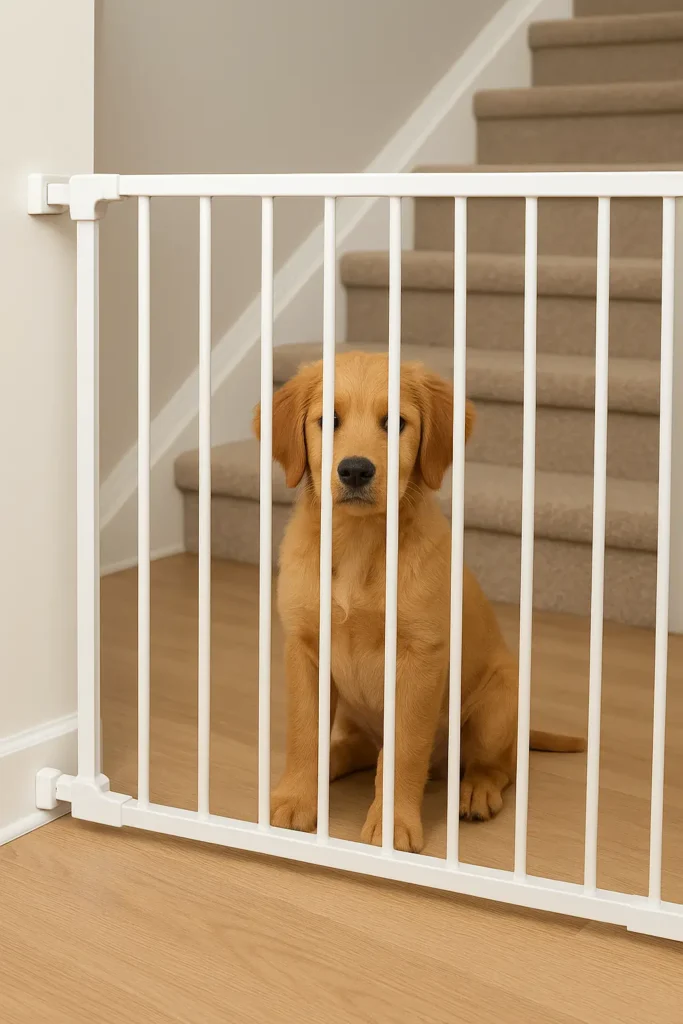
Best Baby Gates for Dogs Keep Your Curious Dog Out of Mischief and Your Home Clean Having the best baby gates for dogs in your home brings peace of mind and happiness. Still, your curious pup or mischievous dog might wander into areas they shouldn’t. Whether you’re keeping a playful puppy away from danger, a stubborn husky out of the living room, or an older dog safe from stair falls, a sturdy baby gate is your best solution. All gates are not equal, however. Others are designed with strength and stability in mind, while others prioritise convenience and portability. To make the decision, PupzCorner has compiled eight of the most successful baby gates that are safe, durable, and designed for dogs. While a baby gate keeps your furry friend safely contained, keeping them entertained is just as important! For more information, please contact us. Best Baby Gates for Dogs: Top Product Picks 1. Wooden Baby Gates It is constructed of solid wood or a wood mixture. It gives the space a cozy feel, matching the home decor, and can be swing-open or slide-open. Pros: Classy and beautiful appearance. Durable when kept indoors. Green and simple to re-paint or refinish. Cons: It is dog scratchable and chewable. It cannot be used outside because it has been damaged by moisture. Installation: Normally, it is screw-mounted on the wall or pressure-mounted. Make sure that both sides are at the same level, then tighten the pressure knobs. Veterinary behaviorists agree that setting clear physical boundaries at home helps dogs feel more secure and reduces anxious or destructive behavior. 2. Metal or Steel Baby Gates It is made of iron, aluminum, or steel and developed as a high-strength and durable product. Most popular in extra-tall or heavy-duty models. Pros: It’s very tough for big and strong dogs. A rust-resistant coating guarantees long life. Pets can hardly bend or be damaged. Cons: Heavier and less portable. Not all interiors may match an industrial appearance. Installation: May be mounted as pressure- or hardware-mounted. Ideal for securing the peak or bottom of stairways for added safety. 3. Plastic or PVC Baby Gates It is constructed from shaped polymer or PVC board, making it lightweight, affordable, and frequently portable or adjustable. Pros: Easy to clean and maintain. Rust-free and lightweight. Big with smaller dogs or puppies. Cons: Not applicable to aggressive or assertive dogs. It can bend or break when pushed. Installation: Usually, it is mounted between walls or doors under pressure. Easy tool-free setup. 4. Retractable Mesh Baby Gates It features a roll-up construction with heavyweight mesh fabric and can retract into a tight casing when not in use, ensuring a slim, contemporary, and minimalistic design. Pros: Perfect in small rooms and minimalistic houses. Easy to operate with one hand. Block not avenues when open. Cons: Mesh may either stretch or tear under the influence of powerful dogs. Not ideal for large breeds. Installation: Attached to the walls with screws. It should be mounted flat to roll and lock. According to the American Kennel Club (AKC), creating safe boundaries at home helps reduce anxiety and prevent destructive behaviour in dogs. 5. Freestanding/ Modular Panel Gates. The structure consists of several interlinked, freestanding panels that aren’t mounted to the walls. Designed to be flexible, it can take on different shapes Pros: No drilling or wall damage. Adaptation in spacious rooms. Works well as a pet playpen. Cons: Not a stable or strong dog, nor a jumper. It can move when pushed or bent over. Installation: Unfold and set on the floor. Make sure that the surface is flat and stable. 6. Extra-Tall Baby Gates Its Mean height is 36-40 inches and above. This product is designed to accommodate medium to large dogs that are jumpers and features metallic or hybrid frames. Pros: It certainly keeps dogs inside, preventing them from climbing up or jumping over. Provides additional security to multi-pet households. Durable and strong build. Cons: Heavier and more expensive. May hide small pets or children. Installation: Typically, either hardware- or pressure-mounted. Ensure the upper latch is positioned correctly, then lock up. 7. Pressure-Mounted Baby Gates Pads or tension rods are used to hold the item in place. Additionally, no screws or fixed fittings are needed for this type of gate. It is easily transportable to other rooms. Pros: Easy and instant installation. No wall damage. Absolutely perfect in temporary/rented houses. Cons: It can slip if dogs push hard. Contraindicated in staircases. Installation: Continue to stretch the gate until the side pads are against the wall. Turn knobs to a point of stability and stillness. 8. Hardware-Mounted Baby Gates It is usually installed on the stairs or in hazardous locations and fitted to the studs or banisters of the wall with a screw. It is the most secure and durable solution for dogs. Pros: Very stable and durable. It is a heavy-duty, dog-resistant, and multi-use. Be careful on the stairs. Cons: Takes equipment and drilling of walls. Leaves leave impressions or holes in leaves. Installation: Mounting requirements were included in brackets, along with screws. Make sure that it is fitted on the wall studs to achieve maximum support. If your dog is still in training, pairing your gate setup with Puppy Training Pads helps keep the area clean and hygienic while they learn. You can also try our Dog Toys 25 Pack for Fun and Teeth Cleaning. Then, Which One is the Right Dog Gate for Your Home? Choosing the right dog gate for your home depends on your pet’s size, behavior, and your living space layout. For smaller breeds, lightweight or pressure-mounted gates may be enough, while larger or more active dogs need sturdy, wall-mounted designs. Consider factors like material, height, and lock type to match your home’s safety needs and style. The right gate not only protects your space but also creates a secure, comfortable boundary for your furry friends. 1. Freestanding Dog Gates Freestanding gates don’t attach to walls
Best Dog Crates for Large & Small Dogs | 2025 Buying Guide
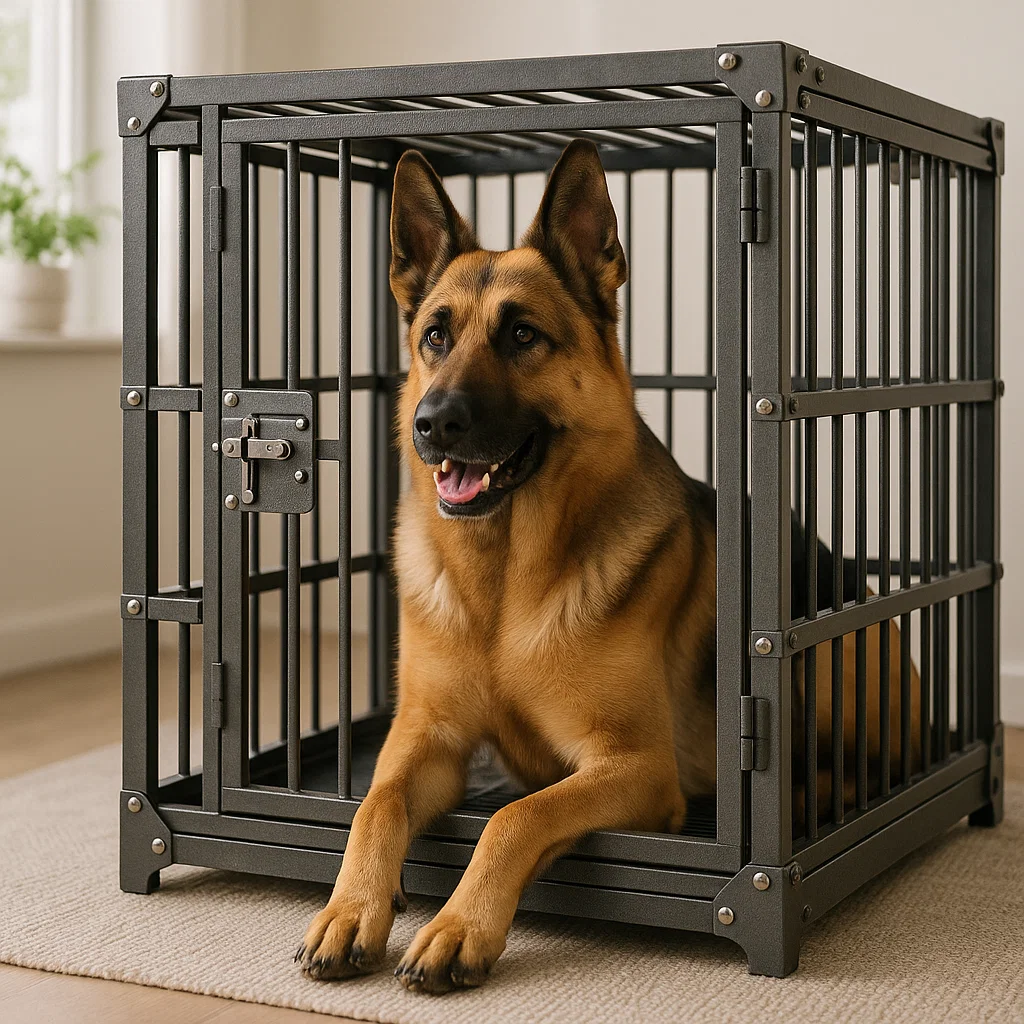
Best Crates for Dogs: Safe and Comfortable Picks for Every Pup You love your dog, but keeping them safe, calm, and comfortable can be challenging. Many pet owners struggle when their dogs become anxious, chew furniture, or have trouble relaxing after playtime. It can be stressful to find a reliable way to give your dog a sense of security and peace inside your home. The right crate for your dog can solve that problem. A well-designed crate gives your dog a cozy space to rest, feel protected, and build good habits. The best crates for dogs also make travel, training, and daily routines easier for you and your pet. At PupzCorner, we focus on helping pet owners choose products that combine comfort, safety, and value. Our team reviewed and compared the best crates for dogs in 2025, evaluating their design, materials, and suitability for different breeds. In this guide, you will learn how to select the right size, understand the key features that matter most, and discover our top recommendations for every type of dog from small puppies to large, active breeds. Why Crates Are Good for Dogs When introduced correctly, a crate can be one of the most valuable tools for your dog’s comfort and behavior. It offers a calm, personal space where your dog can rest, decompress, and feel secure. Crates also support house training by helping dogs learn boundaries and reduce accidents inside the home. During travel or recovery, a crate keeps your pet safe and minimizes anxiety in unfamiliar environments. According to VCA Animal Hospitals, crate training can prevent destructive habits, protect your home when unsupervised, and build your dog’s sense of stability. Texas A&M Veterinary Medicine adds that proper crate training can reduce household stress and speed up housebreaking for puppies. Crates should always be associated with safety and relaxation, never punishment. When you use patience and positive reinforcement, the crate becomes a space your dog chooses to feel like home. Pair your dog’s crate routine with healthy nutrition using the Buffalo Life Protection Formula Adult Small Breed Dog Food from PupzCorner. It supports energy, calm behavior, and a shiny coat for crate-trained pups. Learn more about your dog’s unique traits in our detailed guide on Fascinating Beagle Characteristics. What to Look For in a Quality Dog Crate Choosing the right crate means balancing safety, comfort, and practicality. Before you buy, consider the features that make a crate truly reliable and comfortable for your dog. Key Features to Check: Size: Select a crate that allows your dog to stand, stretch, and turn comfortably. Always size up slightly so your dog can stand and turn easily. Ventilation: Look for good airflow on all sides to keep your dog cool and prevent odors. Safety Latches: Ensure secure, easy-to-lock doors that prevent accidental openings. Material: Metal crates offer strength and durability for larger dogs. Plastic crates provide privacy and travel convenience. Soft-sided crates are lightweight and ideal for smaller or calm dogs. Furniture-style crates blend with home décor while providing comfort. Portability: Choose foldable or lightweight designs if you travel often or need easy storage. A well-built crate not only keeps your dog safe but also helps create a calm, consistent environment they can trust. What Size Crate Does My Dog Need? Choosing the right crate size is essential for your dog’s comfort and safety. The best crates for dogs are spacious enough for your pet to stand, stretch, and turn around without feeling cramped. To find the right fit, measure your dog from nose to tail for length and from floor to top of the head for height, then add about four inches to each measurement. Here’s a quick reference: Small: Under 25 lbs – toy breeds and small companions Medium: 25–50 lbs – average-sized dogs Large: 50–90 lbs – strong and active breeds Extra-Large: 90 lbs or more – giant breeds If you’re crate training a puppy, choose a larger crate with divider panels so you can adjust the space as they grow. Support your puppy’s healthy growth and crate training with the Life Protection Formula Puppy Dry Dog Food from PupzCorner. It’s enriched with DHA for brain development and balanced energy. Top 5 Best Crates for Dogs in 2025 Choosing the right crate is an important decision for your dog’s comfort, safety, and routine. Based on build quality, design, and real pet owner feedback, these are the best dog crates for 2025 that deliver value, style, and reliability. MidWest iCrate Fold & Carry The MidWest iCrate remains a favorite among pet owners for its simple design and affordability. Made from durable wire with a removable plastic tray, it’s easy to clean and folds flat for storage or travel. The dual-door setup provides flexible access and improved ventilation, while the divider panel helps accommodate growing puppies. Pros: Affordable, easy to set up, sturdy design. Best for: First-time crate buyers and everyday home use. EliteField Soft-Sided Dog Crate For pet parents who travel often, the EliteField Soft-Sided Dog Crate offers comfort and portability in one package. Its lightweight steel frame and durable fabric panels make it easy to carry, while mesh windows provide excellent airflow and visibility. The crate comes with a carrying bag and fleece bed, ensuring your dog feels cozy wherever you go. Pros: Lightweight, comfortable, travel-friendly. Best for: Small dogs, road trips, and apartment living. Frisco Heavy Duty Dog Crate The Frisco Heavy Duty Dog Crate is built for strength and security. Crafted from reinforced steel, it features escape-proof latches and locking wheels for easy mobility. It’s ideal for large or strong breeds that need extra durability. Owners praise its stability and long lifespan, making it a great investment for high-energy dogs. Pros: Extremely durable, secure, mobile. Best for: Large and powerful breeds. For dogs who love evening walks after crate time, the Light-Up Dog Harness – LED Safety Vest keeps them visible and secure outdoors. Diggs Revol Dog Crate The Diggs Revol Dog Crate combines safety and modern
Socializing a New Puppy: Your Guide to a Well-Adjusted Dog
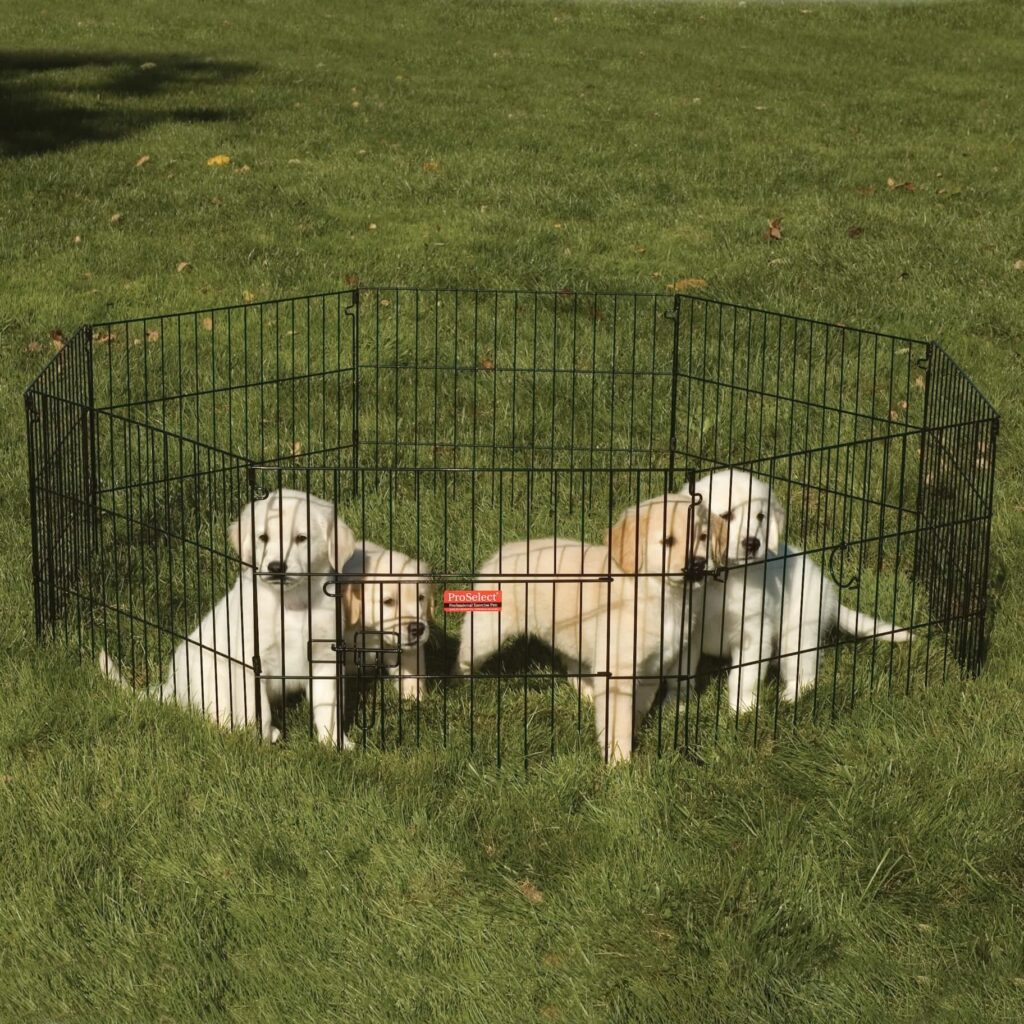
Why Puppy Socialization Matters The arrival of a new puppy is one of the most exciting and joyful events that a pet owner can experience. Whether it is the initial boisterous yell or the cute little paws that are going to play on your floors, it is all precious. However, in all the commotion, one crucial task that preconditions a long, happy, and well-behaved life for a dog is to socialize your puppy. Socialization does not only entail learning to play fetch or sit on command with your puppy. It is about getting them used to being confident, flexible, and at home in various environments, with people, and with other animals. When puppies are socialized at a young age, they are less likely to develop behavioral problems such as excessive fear, diva behavior, or anxiety. They also train better, feel more secure in social places, and are generally better company. This guide will cover all the information you need to know about socializing a new puppy, including when to do it, practical methods to use, common mistakes to avoid, and valuable products offered at PupzCorner that will make the process more comfortable and enjoyable for both you and your new puppy. For more information, please contact us. Source: yandex.com Understanding Puppy Socialization Tips The process of exposing your puppy to a variety of experiences, people, pets, environments, and everyday sounds in a positive and controlled manner is known as socialization. The crucial period of socialization is between the ages of 3 and 14 weeks. This is the period when puppies are particularly open to new things. Pro Tip: Never socialize without offering positive reinforcement, treats, praise, and affection to form strong, positive associations. The puppy training treats from PupzCorner are the best bet in this endeavor, and every encounter is enjoyable and fruitful. The Age of Starting the Socialization of Your Puppy Timing plays a crucial role in socialisation. It is an exercise that can begin at the moment of a puppy’s arrival at the house, which is typically about 8 weeks old, though some factors do matter: Also, ensure that your puppy has been vaccinated against the most important health issues, as health is always a priority. Add one new experience at a time, either a new toy, a member of the family, or a short walk outside. Brief, pleasant sessions are better than prolonged and upsetting sessions. Young pupils should be socialized effectively, and this paper provides five tips on how to do just that. 5 Effective Ways to Socialize Your Puppy: A Socialization Checklist Use these five proven methods and a socialization checklist to help your puppy grow into a confident, well-adjusted dog. 1. Introducing the puppy to people The puppies are to be shown to children, adults, and people wearing hats, sunglasses, or crazy clothes. Let your puppy go up to people when they are ready. Reward a kind and gentle demeanor with words of praise or comfort. Limit the time spent interacting at the beginning and extend it as time goes on. Pro Tip: Reinforce the positive behavior every time you meet a new person with PupzCorner puppy training treats. Puppies experience a key “social imprinting window” between 3–14 weeks old, during this time, every new person they meet helps shape their confidence for life! 2. Expose Your Puppy to Different Environments Take your puppy out to parks, streets, pet-friendly stores, and various areas at home. Benefits: Train your puppy to be comfortable with a lot of noise, such as traffic or the sound of vacuum cleaners. Develops confidence on various surfaces, including grass, concrete, and tile. Becomes less frightened by strange or startling circumstances. Product Suggestion: You can take your puppy safely into the busy streets or crowded places with the help of the PupzCorner-provided leash set for dogs, where you can keep your puppy safe and contained. 3. Arrange Playdates with Other Dogs Controlled playdates help your puppy understand boundaries, play etiquette, and social cues. Ensure all dogs are vaccinated and healthy. Start with one-on-one introductions before group play. Supervise all interactions closely to prevent fights or stress. Product Suggestion: Puppy spike balls are perfect for controlled indoor play sessions, giving your puppy a safe space to explore while interacting with other dogs. Source: yandex.com 4. Introduce Household Noises Gradually Everyday noises can be intimidating for young puppies. By desensitizing your puppy to household sounds, you reduce the risk of noise-related anxiety later in life. Common noises to introduce: Vacuum cleaners Washing machines Doorbells Kitchen appliances Method: Start with the noise at a low volume. Pair the experience with treats or toys to create a positive association. Gradually increase the intensity as your puppy becomes comfortable. Pro Tip: Interactive toys or chew toys from PupzCorner can help distract your puppy while they adjust to new sounds. 5. Practice Gentle Handling and Grooming Start touching your puppy’s paws, ears, and mouth from an early age to help them get used to it. Handle paws, ears, and mouth daily for a few minutes. Use treats and praise to reward calm behavior. Product Suggestion: A PupzCorner puppy grooming kit makes grooming a positive and stress-free experience, helping your puppy associate handling with fun and comfort. If you are interested in learning more about How to Get your dog trained, you can check our blog. Helpful Puppy Training Products for How to Socialize a Puppy Here are some must-have puppy training products available at PupzCorner that every new puppy owner should consider. 1. Puppy Training Treats Favors form the basis of positive reinforcement training. They encourage your puppy to behave well in new situations and interactions. 2. Puppy Playpens Controlled exploration depends upon the safety of the environment. Playpens will enable your puppy to explore new surroundings and be safe at the same time. 3. Puppy Harnesses and Leashes To safely socialize in the outdoors, a harness is required to be correctly fitted. Harnesses do not put strain on the
Getting a Puppy: Smart Steps to Start Right
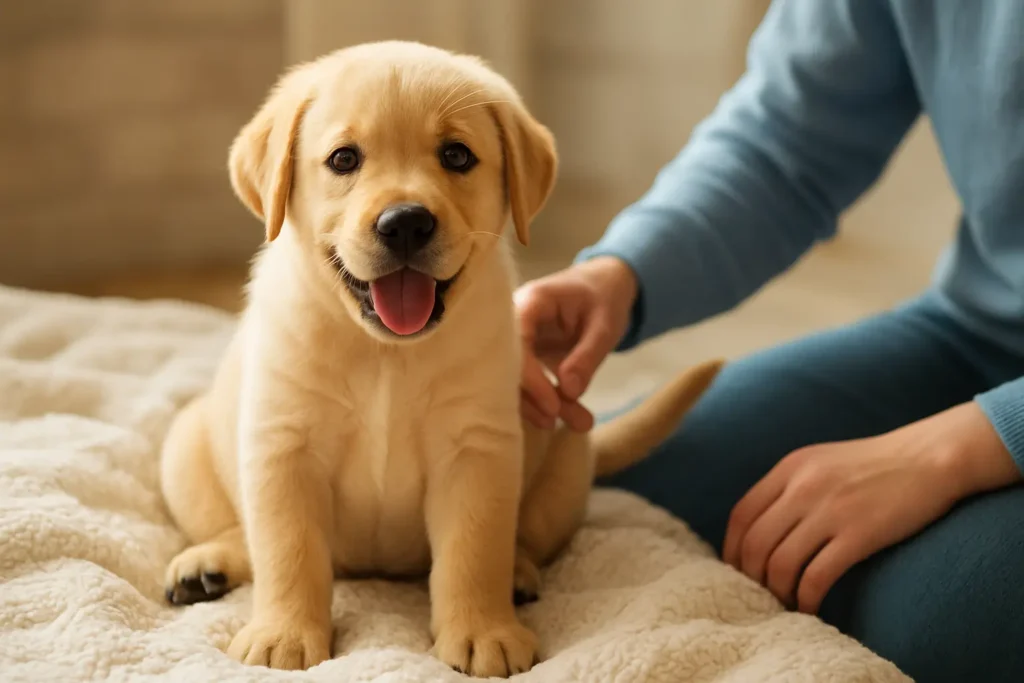
Those adorable little dog eyes. That wagging tail. That little pebble that burns your heart. It’s easy to fall in love and think you need a pup today. However, since you are about to get a dog, you must take a slow breath because this choice alters your life in both positive and, in some cases, the most difficult aspects. Getting a puppy is not a weekend affair. It is a lifelong process that is full of happiness, patience, responsibility, and numerous learning hours. This article will take you through all the information, such as dog care tips and a first-time puppy owner guide, that you ought to know before owning a dog, particularly when this is your first time owning a dog. At PupzCorner, we’re dedicated to helping new pet parents get off to a strong start with expert guidance, essential dog supplies, and practical care manuals. You are about to start your pup adventure. Contact us now & allow our team to help you prepare to welcome your new furry friend. What It Really Means to Get a Puppy When individuals visualize the process of adopting a pup, they envision cuddling, playing, and taking walks. What they do not imagine is the cleaning up of accidents, tooth damage, and 5 a.m. wake-up calls. Owning a dog is a full-time occupation. You are not merely buying a pet, but raising a living creature that needs you to feed, love, and guide. The honest questions to ask before you get one are: Do I have time to train, feed, and exercise every day? Will I be able to pay the vet bills, good food, and hair cutting? Am I psychologically prepared to be patient with puppies? When the answer to this is yes, then you are prepared to begin this fruitful period of life. The Best Time to Get a Puppy When is better than why? A pup should be acquired at the right time, and when you can afford to provide time and stability to them. Avoid bringing a whelp home right before vacations, during busy work seasons, or during major life changes like a home move. Puppies require organization and discipline, and the initial 23 months are essential in bonding and training. In areas with extreme weather conditions, it is advisable to adopt measures during the warm season. House training, outdoor walking, and socialization are easier. Pups aged 8 to 12 months adapt well to new homes where they are mature enough to learn and immature sufficient to form close attachments. After determining the time of day of the week you should bring a pup home, the next thing to do is to select the ideal breed. Breeds that best suit family life can be found in our list of Top 7 Small Dogs for Families. Preparing Your Home Taking a puppy home unpreparedly is similar to having a toddler and not having any safety gates, and the same devastation can occur. The following are the steps for preparing your home with a puppy: Puppy-proof your house: Take away small items, poisonous plants, cables, and open trash cans. Develop a secure space: Prepare a small, comfortable space, including a bed or a crate, toys, and water. Prepare cleaning supplies: Accidents are a common aspect of maintaining pet-safe cleaners on board. A secure environment helps your puppy get accustomed quickly and avoid untimely accidents. Puppy Checklist Essentials for a New Owner You should have everything that a dog owner requires before the arrival of your puppy: Puppy food and treats Food and water bowls Collar, leash, and ID tag Soft crate or bed Training treats and chew toys. Puppy shampoo and brush Puppy pads or grass mats These will come in handy during the initial few weeks of your lives. It is also important to remember that adopting a puppy requires planning to ensure their safety and comfort. Want to save time shopping? Explore our Small Dog Clippers, which have everything your new puppy needs. First-time puppy owners carefully select everything. Puppy Health and Vet Care A visit to a vet is one of the initial steps to be taken upon the adoption of a little dog. You will be provided with instructions on the vet: Immunization and reinforcement timetables. Deworming and prevention of fleas and ticks. Early health checks A healthy dog is maintained through keeping up with its health schedule and regular vaccination. Schedule a checkup every few months within the first year. Your whelp may need an easier time keeping up with his health routine, so go and see our Puppy Health and Grooming Kit. It contains mild shampoo, a soft brush, and other things that will ensure that your pup is clean and comfortable between visits to the vet. Puppy Food and Nutritional Requirements Proper feeding of your whelp is among the greatest aspects of early care. Their small bodies develop rapidly, necessitating a balanced diet rich in the proper nutrients. Puppy food nutritional requirements include: High-quality protein (for muscle and tissue growth) DHA & Omega-3 fatty acids (for brain development) Calcium & phosphorus (for strong bones and teeth) It is better to avoid adult dog food, human snacks, and excessive treats for them, which may upset their digestion and development. Never ignore the labels on the food, or consult your vet on the type of food that should be given to your dog, depending on their breed and size. Training Basics for First-Time Puppy Owners Through early training, your whelp develops trust, discipline, and habits that last a lifetime. Start with house training and take your pup for a walk every few hours, especially after meals and naps. Implement crate training as a tool to assist with behaviour and potty training. Keep sessions short and positive, and reward any success. Basic commands such as sit, stay, and come are supposed to begin in the first few weeks. It is essential to be consistent, patient, and praise. And do not forget that socialization
Get Your Puppy To Stay: Effective Dog Training
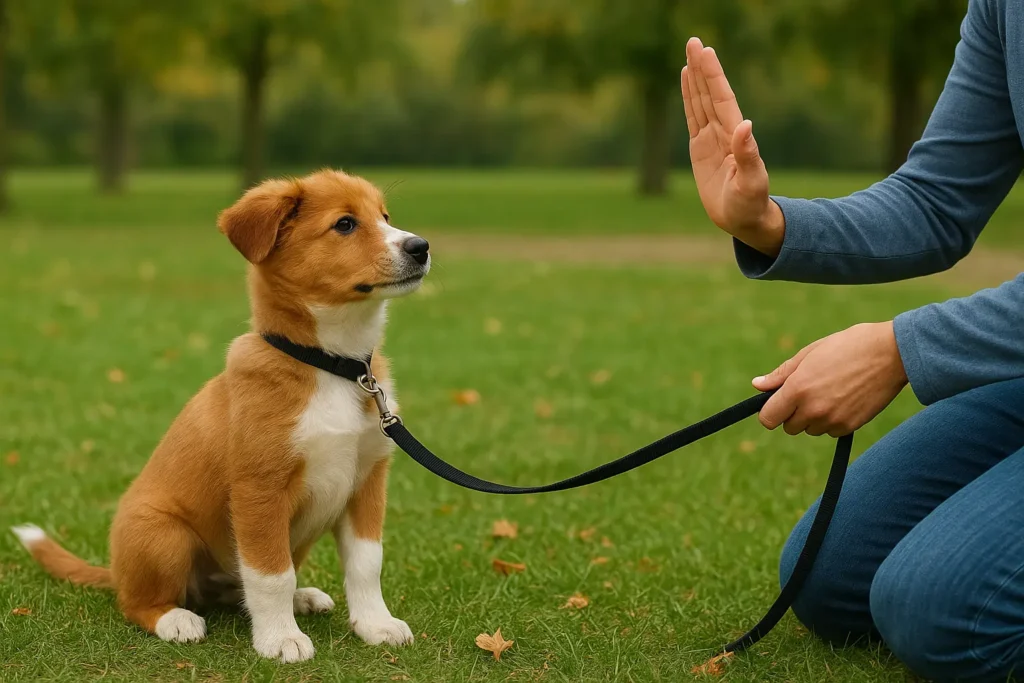
How Do You Train Your Puppy to Stay Effectively? Train Your Puppy to Stay is not easy. You see that there was a time when you had a puppy that waggled its tail and its eyes shone, and it was going to run away after a butterfly, or run to the front door when you opened it? Teaching your puppy to stay can be relatively easy, as it is one of the most effective obedience and safety training exercises. PupzCorner has no doubts about the excitement and fatigue that come with puppy training. It is not simply about discipline but also about the advancement of dialogue, patience, and trust between you and your little one, which is included in the stay command. We’ll walk you through it all, step by step: when to start, what to avoid, and how to handle those inevitable accidents when your pup cannot sit down. Join us as we guide you through how to train your puppy to stay, be safe, have fun, and be effective! Why Teaching the Stay Command Matters Although “stay” may not sound like a high-order command, it is one of the essential obedience skills your puppy will acquire. It plays a significant role in: Safety: Keep your puppy in control in the streets or other unsuitable areas. Discipline: This is what you can use to teach your dog patience and control impulsive behavior. Organizational: Eases the grooming, feeding, and walking. Bonding helps develop trust – your puppy learns to trust you. Socialization: This helps train your puppy not to panic around people or other pets. PupzCorner Observation: Puppies not only pick up commands but also learn from the tone and expression of their voice. One needs to stay positive and workable. When to Start Dog Behavior Training for Your Puppy to Stay The main question that everyone is curious about is when to start this, so here are a few key notes about it: Training begins at 8 to 12 weeks of age (however, old dogs can also be trained!). Keep the sessions to 5-10 minutes. When your puppy is not distracted, you should train him. You should focus on fun, consistency, and not perfection. Puppies cannot be trained without play, praise, patience, and encouragement. Puppy Training Tips for Beginners: Stay- Step-by-Step Guide. Ready to start? This is the step-by-step process of PupzCorner. Step 1 – Create the Perfect Training Area To create a quiet, distraction-free home environment, ensure there are no toys, television, or people present. Puppies learn faster when they can entirely focus on you. Keep sweets and a clicker (not obligatory). Establish a calm environment that doesn’t distract your pup. They will even feel safe on a light and smooth surface. The training area can be effectively set up with the help of a PupzCorner Removable washable cover seat, which is comfortable, washable, and facilitates the development of routine. Step 2 – Start Basic Puppy Commands Your dog should learn how to sit down and stay. Make your puppy sit, say the word, wait, and reward them. This preconditions your stay training, which creates a relaxed pose. Step 3 -Introduce the Word “Stay” When you have your puppy sitting, put your hand out like a stop sign. Say the word Stay in a monotonic, low but firm voice. Pause for 2–3 seconds. You must be ready to reward your puppy immediately when they remain still. If they move, don’t scold. Just reset and try again. Tip: Timing is key. You must never fail to reward your pup whenever it acts. Step 4 – Take One Step Back When your pup starts taking several seconds to stay, take a single step back. Repeat the reward in case they stay put. Repeat this process many times until your puppy understands that staying in the same place earns it a reward. This stage will help your dog understand distance and develop self-control. Step 5 – Slow Expansion of Space and Time Prolong the length and lengthen gradually. Stay for 5 seconds → 10 → 20 → 30 seconds. Take a step to the right of Room 2. You need to continue returning to your puppy to reward them. Patience is the saving of hastiness, deceives, or irritates. Step 6 – Add Real-Life Distractions Once you are perfect with your puppy, you can add a few obstacles, but not too many: Toss a toy nearby. Ask an individual to walk across the room. Whimper or open the door. Praise them by not focusing on the distraction. Suggestions: PupzCorner Puppy Training Treats are healthy and ideal for brief and recurring reward periods. Step 7 – Practice, Praise & Repeat or Reward-Based Dog Training The sessions are most suitable, being short and frequent, with 23 sessions a day, each lasting 5 minutes. You should always make the end of the session a good one, even though your puppy is only successful once. Celebrate progress! It is a long way to a smile of good stay, a cuddle. Once your puppy starts mastering basic commands like “stay,” it’s time to help them grow confident around people and other dogs. Read our guide on Socializing a New Puppy: Your Guide to a Well-Adjusted Dog to raise a happy, friendly, and well-behaved companion. Common Mistakes to Avoid Even parents who love their pets the most also make a few mistakes in training. The following are the ones to be careful about: Overtraining -Ironic puppies can be frustrated by very long sessions. The effectiveness of short and frequent sessions is more effective. Inconsistency -The problem of staying sometimes and not other times is confusing your puppy. Always follow through. Omission of basic commands – A pup should know how to sit before you learn how to stay. Punishment– Spanking is just a way of instilling fear. Instead, give praise to reasonable efforts and then re-initiate. Failure to use release words: You can always use a word like “okay” or “free” to let
How to Safely Break Up a Dog Fight | PupzCorner Guide
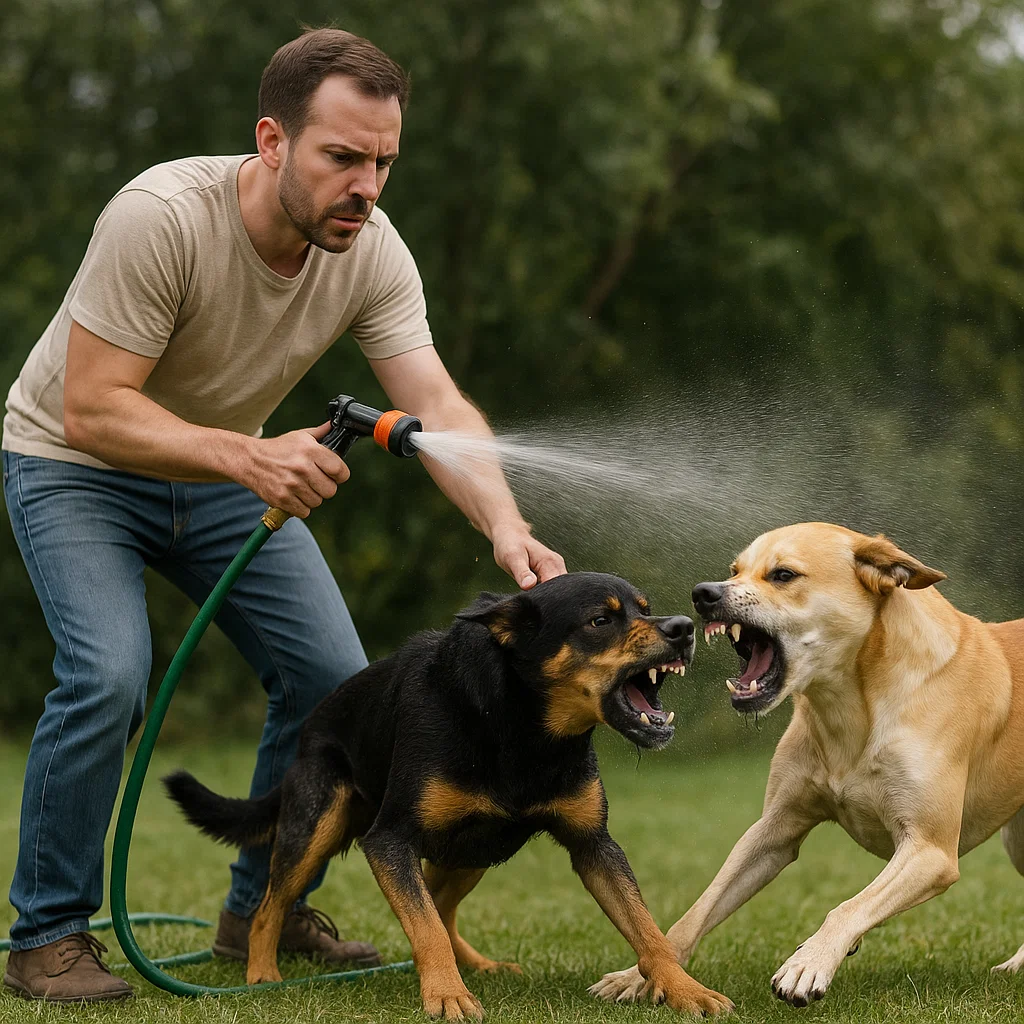
What’s the Best Way to Break up a Dog Fight More than 4.5 million individuals have reported dog bites in the United States alone. Of these lots, over 800,000 people required critical medical attention. But let’s back up a bit. This statistic doesn’t mean dogs are deadly creatures. There’s a reason we know dogs to be man’s best friend. According to Big Think, “Scientists found that dog owners’ aroma sparked activation in the ‘reward center’ of their brains, called the caudate nucleus. Of all the wafting smells to take in, dogs prioritized the hint of humans over anything or anyone else.” However, dogs are social animals with a whole social order. In this order, there’s the occasional urge to establish dominance. Dogs duel to determine who’s the alpha, and these fights can get pretty intense. That’s not to say dogs don’t play-fight. But even play-fights can escalate pretty fast. Whatever the case, you’ll want to break up the fight before someone draws blood. How? Certainly not by shouting “No!” or getting in between the dogs. According to University of British Columbia Psychology Professor Stanley Coren, “If you try to intercede in a dogfight and you don’t know what you’re doing, you’re most likely going to get hurt yourself.” There are safer ways to stop a dog fight so you don’t end up hurt. In this PupzCorner guide, we’ll discuss proven methods and expert tips for safely and effectively stopping a dog fight. Let’s get to it. Prevention Is the Best Way to Stop Dog Fights Wouldn’t it be great to stop a dog fight before it even began? Luckily, you can. Dogs shoot off a lot of visual cues when they’re about to fight. Here are a few signs of an impending dogfight: Lots of growling, whining, and barking Stiff tail wags Controlled paces as opposed to a bouncy movement Staring contests with weights pulled forward Exaggerated yawns Even though this isn’t a comprehensive list, these cues show aggressive intentions. Recognizing them should give you a fair idea of what’s about to go down. Once you identify the makings of a fight, be sure to move your dog away from the area. It’s difficult to tell the difference between roughhousing and fighting in dogs, even for pros. Err on the side of caution and put your dog away. How Neutering Helps Prevent Dog Fighting If you’re not too big on your dog reproducing, you can have it neutered. Neutering your dog reduces its chances of getting into a fight. According to the American Veterinary Medical Association, “unneutered male dogs represented 90% of dogs presented to veterinary behaviorists for dominance aggression. They are also involved in 70 to 76% of reported dog bite incidents”. You can think of this as a win-win situation. You get to lower your dog’s aggression and prevent future fights with potential mates. Safe Ways to Break Up a Dog Fight If you have to get involved in a dog fight, then you should have these tips in mind. Stay Calm and Assess the Situation When you see your dog in a dogfight, your first instinct will be to jump in and rescue him. Don’t! What you should do is remain calm. Keep a clear head to avoid getting hurt. Assess the situation and figure out what’s going on. If it’s just barking and snarling, you can turn a blind eye as the dogs may just be trash talking. It’s like Stanley Coren says, “The more flashy and noisy the argument is, the less likely you’ll need to get involved. In most cases, if you leave the dogs to their own devices, they probably won’t hurt each other, or at most will leave a few small punctures around the face, ears, and neck. Distract the Dogs with Loud Sounds If it’s a real dogfight, you can try distracting the dogs. An effective distraction is anything loud enough to cause a momentary pause. For instance, clanging metal lids together or even playing an air horn. That should get their attention. This momentary pause gives you time to pull your dog away to safety. It’s also a great way to help your dog escape if he’s the one on the receiving end. Use Water or Citronella Spray Surprisingly, blasting fighting dogs with water is an effective fight breaker. If the fight is going on outside, you can gauge a garden hose at the fighting dogs to break them up. It distracts them long enough that you can maintain some control. Of course, you may not carry a water hose along for a walk, no problem. You can easily find hoses in the park too. If you can’t go through that hassle, you can always have citronella spray handy. Citronella is used to curb barking in dogs, but it can get the job done. Throw a Blanket Over the Dogs Another proven method to break up a dog fight is to toss a blanket over the dogs. This usually startles them and breaks off the fight. Why does this work? Well, the blanket covers the dogs’ line of sight, reducing their aggression levels. It’s also an excellent containment method for fighting dogs. Additionally, the blanket decreases the effects of scratches and bites from the fight. It also lowers your chances of getting bitten if you get into the mix to separate them. ➜ Explore All Kind of Dog Foods & Essentials – Shop Now at PupzCorner Try the Wheelbarrow Technique (Last Resort) The wheelbarrow technique should be your last resort. It’s risky and requires many people to do the separation. Each person grabs hold of a dog by the hind legs and raises it into the wheelbarrow position. Then you move the dogs further away from each other to stop fighting. This position makes it difficult for the dogs to keep fighting. But, the dogs can turn on you as well. You’re holding a vicious tiger by the legs. It would be best to remember to turn in circles
Best Gates For Dogs 2022 Indoor , Expandable

There are a million reasons why you may need a Best Gates For Dogs. Are you trying to keep your new naughty pup from getting into trouble? Or are you trying to block off access to a room that your boisterous husky has gone berserk on? Do you have a senior or injured dog that could easily get hurt from tumbling down the stairs and injuring itself further? Your reason could be just as simple as mopping the floor and trying to prevent curious little paws from ruining your efforts. Whatever your reasons, you need the Best Gates For Dogs to block certain areas you don’t want your pup in. Not all pet gates are created equal; some are better than others. We have gone through a list of the best pet gates and have settled on these eight products as our top picks. Whether you’re looking for a baby gate for stairs, wide openings, doors, or playpens, this product review should help you. 8 Best Baby Gates For Dogs Cumbor Baby Gates For Dogs – Indoor Richell Wood Baby Gates for Dogs – Wide Dog Gates Carlson Extra Tall Baby Dog Gate – Dog Gates For large PETMAKER – Dog Gate for Doorways – Expandable Panel Freestanding Wooden Pet Gate – Pressure Mounted Easy Walk Thru Dog Gate for Stairs – Walk Through Dog Gate Carlson Product Dog Gate – Tension Gate For Dogs Mypets North States Pet Gate – Best For Wide Openings Best Gates for Dogs: Buying Guide Having a dog in the house brings an unexplainable joy that only pet owners can relate to. We simply adore and dote fiercely on them. But sometimes, they can be underfoot and try out patience from time to time. And in those moments, you want to keep them away safely so you can go about your activities without disturbance. Whether you have a cat that has just had her litter, or you are entertaining visitors, and you want to keep your curious and naughty dog out of the way, you need the best dog gate to achieve this feat, especially if your dog is a seasoned escape artist. You need detailed information on how to go about choosing the best one. This buying guide will provide all the necessary information you need to make an informed buying decision. Enjoy! What are the types of baby gates for dogs? Freestanding These gates are designed to stand independently without any attachment or mountings to walls or floors. They are usually built with extra support to be sturdy and freestanding. These pet gates are popular among pet owners because they will not cause damage to walls or skid marks on floors. I’ll advise that you choose a freestanding dog gate if you have calm or small dogs; bigger and more active dogs will have no trouble toppling it over. Adjustable-tension Adjustable tension gates are designed to apply pressure to the wall to tighten and stabilize the gate. They are not attached to the wall directly and will not damage your walls. Tension dog gates are a little more complicated to install than regular gates. If the tension is not done in the correct order, the gate will not stay upright and strong. If you are a first-time pet owner, this dog gate may be tricky to set up. Hinges These types of dog gates are designed with several panels hinged together. They are usually freestanding, and the hinges make these pet gates easily fold into different configurations. You can even turn them into playpens that keep your canine contained outdoors or in open spaces. Hinged dog gates are also a great option for pet owners who spend a lot of time outdoors or travelling; they fold nicely for easy storage. Walkthrough These dog gates are adjustable tension gates, but they have a small swinging door. Some swinging doors are designed to be small for pets alone, and others may be large enough for you to walk through comfortably. Walkthrough gates are perfect for parents who own escape artists as pets. If you have a large, boisterous dog(s) and want to keep them from accessing certain areas, walkthrough gates may be the best option for you. How do I choose the best pet gates for my dogs? Usage When choosing the best dog gate for your beloved canine, you first want to consider where you’d be placing it and how frequently you’ll need to pass the gated area yourself. Do you want to be stepping over it? Or you’d prefer one with a walkthrough gate? The type and style of pet gate you buy depends on its placement and frequency of use. For instance, the pet gate you use for stairs will differ from the one used for wider openings. Consider these factors carefully before choosing the best one for you and your pup. Material How long your pet gate lasts depends on the quality of the material used in making it. Some popular materials used in making baby gates for dogs are wood, plastic, metal or a combination of mesh and other materials. Your dog’s personality should influence your choice of material. For instance, a wooden or plastic pet gate may not be the best choice if your dog is a vigorous chewer. And if you have a large dog who loves to jump over or escape confinement, you need a sturdy metal or wooden pet gate. Size The size of a dog gate should be one of the most important factors to consider when choosing the best baby gates for your dog. So how tall should a dog gate be? The answer to this question depends on the size of your doorway, the gap you need to block, your dog’s size, and its jumping ability. To get an idea of the ideal pet gate for you, measure the size of the area you want to block. The general rule of thumb for choosing dog gates is that the height could
Best Flea and Tick Prevention for Dogs | PupzCorner Guide
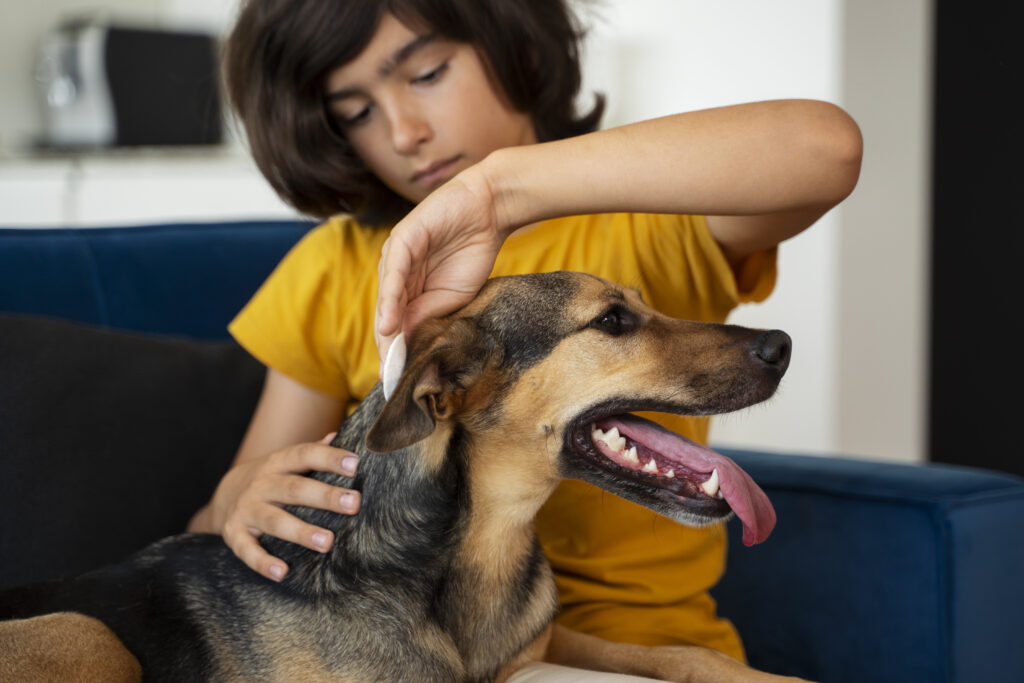
Effective Flea and Tick Prevention for Dogs Naturally Fleas and ticks may be tiny, but they create serious risks for your dog and your family. These parasites bite, irritate the skin, and carry dangerous diseases. When your dog comes inside after a walk, lies on the couch, or plays with the children, fleas and ticks can quickly spread through your home. That is why flea and tick prevention for dogs is one of the most important parts of responsible pet care. Protecting your dog also protects the people and spaces you love. You do not need to wait until you see the signs of an infestation. With the right steps, you can stop parasites before they ever reach your pup. In this guide, you will discover safe, natural, and effective ways to keep your dog protected. Follow these tips to keep your pet healthy, your home clean, and your family safe all year. For more trusted advice and quality pet care products, visit PupzCorner and explore solutions designed to keep your furry friend happy and pest-free. Why Flea and Tick Prevention for Dogs Matters Fleas and ticks are not just annoying, they threaten your dog’s health and comfort. These parasites bite, irritate the skin, and spread diseases like Lyme disease and tapeworms. They also move quickly from your pet to furniture, carpets, and bedding, turning a small problem into a full infestation. In one global survey covering 8 countries in East and Southeast Asia, 42.4 % of dogs showed exposure to ectoparasites (fleas, ticks, etc.). Flea eggs can survive for weeks inside your home, while ticks can attach silently and feed for days. This makes flea and tick prevention for dogs a critical part of daily pet care. By acting early and using safe prevention methods, you protect not only your dog but also your family and home. Recognizing the signs of flea vs tick on dogs helps you respond faster and avoid serious health risks. A strong prevention routine gives your dog lasting protection and keeps your living space pest-free. Keep your dog strong and healthy from the inside out with the Breed Health Nutrition Labrador Retriever Adult Loaf in Sauce from PupzCorner, packed with nutrients that promote skin defense and vitality. Diatomaceous Earth for Natural Flea Prevention What is Diatomaceous Earth? Diatomaceous earth is a fine powder made from fossilized algae. It works against fleas and ticks by breaking down their protective coating and drying them out. This natural method is effective for controlling pests without exposing your dog to harsh chemicals. How to Use Diatomaceous Earth for Dogs Fleas Always choose food-grade diatomaceous earth. Sprinkle a small amount onto your dog’s coat, bedding, and areas where they spend time. Work it gently into the fur while avoiding the eyes, nose, and mouth. You can also apply it on carpets and furniture to target hiding spots. Strengthen your dog’s natural defenses with the Freeze-Dried Raw Dog Food – Beef Recipe. Its real meat protein helps maintain healthy skin and coat for natural pest resistance. Safety and Effectiveness Since diatomaceous earth does not kill flea eggs, you should continue treatment for at least two weeks. This breaks the flea life cycle and prevents re-infestation. When used correctly, it is safe for pets and highly effective as part of flea and tick prevention for dogs. Discover more ways to treat your spoiled pets with love and care. Rose Geranium Oil as a Natural Tick Repellent Why Use Rose Geranium Oil for Dogs Ticks Rose geranium oil shows strong promise as a natural tick repellent for dogs. In lab tests, one geranium oil sample repelled over 90 % of ticks at 0.103 mg/cm² in a vertical bioassay with Amblyomma americanum nymphs. Other research reviews show essential oils can achieve effectiveness ranging from 5 % to 100 % depending on type, concentration, and method. How to Apply Rose Geranium Oil Always dilute rose geranium oil in a carrier oil (coconut, jojoba, etc.). Use a drop or two on a cotton ball, then dab behind the shoulders and at the base of the tail areas ticks often latch. Some formulations even suggest placing diluted drops on the collar. Reapply regularly, especially after your dog is outdoors or in high-tick zones. Safety Precautions Never apply undiluted essential oils directly to your dog’s skin. Avoid use on puppies, pregnant or nursing animals, and those with sensitive skin. While rose geranium oil and other essential oils hold potential, results depend heavily on concentration, formulation, and application method. In some field trials, blends of essential oils have shown full protection against ticks within 7 to 14 days of regular use. Always patch-test on a small area first, monitor your dog’s reaction, and consult your vet before starting. Does Salt Work for Flea Prevention on Dogs How Salt Affects Fleas Salt can dehydrate and kill adult fleas and larvae by damaging their protective coating. Sprinkling fine salt on carpets, pet bedding, and hidden areas may help reduce flea populations indoors. According to the University of Kentucky Entomology Department, table salt is effective in drying out flea eggs and larvae in carpets, but it works best as part of a broader control plan, not as a single solution. How to Use Salt Safely Mix fine table salt with warm water and apply the solution lightly to your dog’s coat or sprinkle dry salt on areas where fleas hide. Leave it for a short period before rinsing or vacuuming thoroughly. Always use caution and avoid inhaling the salt dust by wearing a mask during application. Older dogs need extra joint and immune support while staying pest-free. Try the Life Protection Formula Large Breed Senior Dry Dog Food for balanced nutrients that aid recovery and long-term health. Limitations of Salt for Flea Prevention Salt can dry the skin if overused, and it does not kill all flea stages, especially pupae. This means fleas may reappear if you rely on salt alone. For best results, use salt alongside other flea
Dog Feeding Guide: How much dog food should I feed my dog?
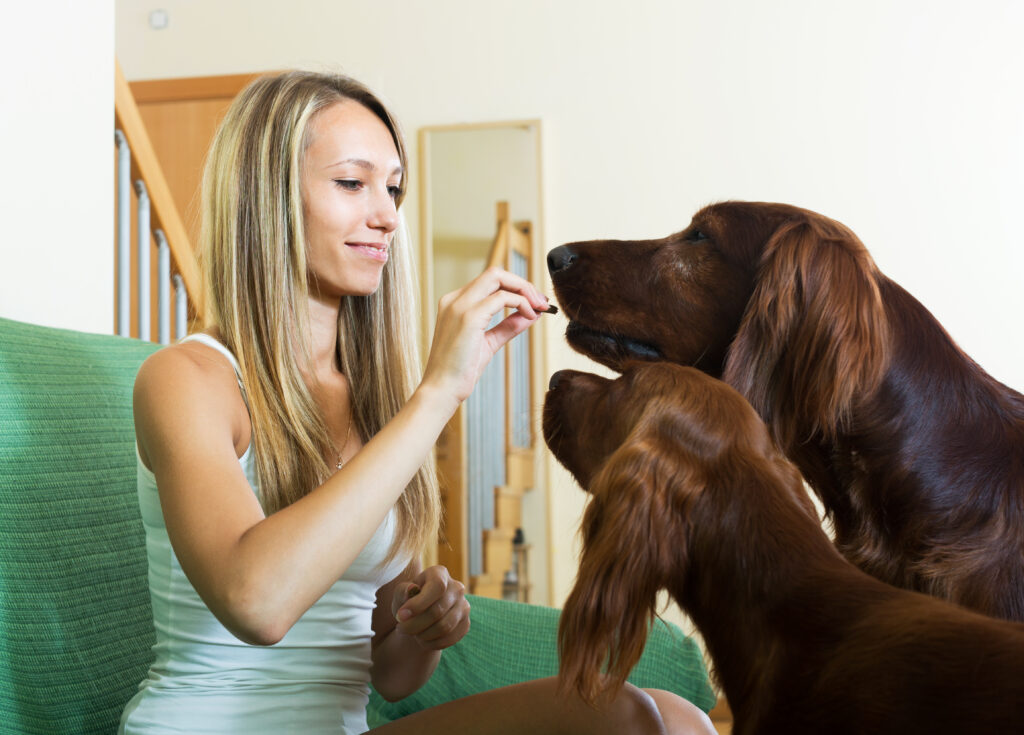
Dog Feeding Guide: How much dog food should I feed my dog? Feeding your dog might seem simple, but many pet owners find it confusing to know how much to give, what foods are safe, and when to feed. You might ask yourself, “How much dog food should I feed my dog?” It’s important because feeding too much can cause weight gain and health problems, while feeding too little means your dog may not get enough energy and nutrients. Plus, you may wonder if it’s okay to share some of your food, like eggs or hot dogs, with your furry friend. This Dog Feeding Guide is here to clear up those questions. We’ll explain the basics of what your dog needs to stay healthy, including proteins, fats, and vitamins. You’ll find easy tips on how much to feed, with a handy dog feeding chart to make it simple. We’ll also answer common questions like, “Can I feed my dog eggs?” or “Is it safe to give hot dogs?” and share advice on feeding raw meat. Finally, we’ll help you find the best times to feed your dog and how to change their diet as they grow or their needs change. With Pupzcorner’s expert guidance, you’ll feel confident giving your dog the right nutrition for a happy, healthy life. Understanding Dog Nutrition: The Essentials of a Balanced Diet Feeding your dog a balanced diet is essential for their overall health and wellbeing. A proper dog feeding guide emphasizes the six key nutrients dogs need: proteins, fats, carbohydrates, vitamins, minerals, and water. These nutrients work together to support your dog’s body functions, energy, and growth. Proteins provide essential amino acids necessary for building and repairing tissues. Since dogs can’t produce all amino acids on their own, these must come from their diet. Fats are crucial for energy and maintaining a healthy coat and skin, while also supplying essential fatty acids like omega-3 and omega-6. Carbohydrates, primarily from grains and vegetables, provide energy and fiber, which is vital for digestion. Try the Pure Balance Wild & Free Salmon & Pea Recipe for a grain-free option rich in protein and omega fatty acids that support a shiny coat and healthy skin. Vitamins and minerals play a key role in many body functions, including immune support, metabolism, and bone health. While dogs can produce vitamin C on their own, they still need vital nutrients such as vitamins A, D, E, K, and minerals like calcium and phosphorus from their food. Additionally, fresh and clean water is crucial for your dog’s health, as it makes up over half of their body weight and supports all systems. For adult dog feeding, the right portion size and nutrient balance depend on factors such as age, breed, activity level, and health status. Using a dog feeding chart can simplify determining the appropriate meal amounts, making balanced feeding easier for pet owners. When choosing dog food, look for labels that say “complete and balanced,” which indicates that the food meets nutritional standards set by organizations like AAFCO. This ensures your dog receives all the necessary nutrients for a healthy and thriving life. For balanced daily nutrition, the Original Dry Dog Food – Savory Beef & Chicken Flavors from PupzCorner keeps adult dogs strong, active, and satisfied. How Much Food Should I Feed My Dog? Knowing how much to feed a dog is essential for keeping your pet healthy and preventing issues like obesity or malnutrition. While it’s tempting to give your dog extra treats or fill their bowl generously, portion control is key. Dogs don’t instinctively stop eating when they’ve had enough, so as an owner, it’s important to measure their food based on their specific needs. Factors That Impact How Much Dog Food Should I Feed My Dog? Several factors influence how much dog food should I feed my dog? These include your dog’s age, weight, breed, activity level, and metabolism. Puppies require more frequent meals with higher calorie content to support their rapid growth. Adult dogs need fewer calories, adjusted to their energy expenditure. Active or working dogs burn more calories and need larger portions compared to less active or senior dogs, who tend to require fewer calories due to lower energy levels. Understanding your dog’s unique needs is essential to providing the right amount of food for their lifestyle. Using a Dog Feeding Chart for Portion Control A dog feeding chart can make portioning easier and more accurate. Most commercial dog food packages provide feeding guidelines based on your dog’s weight, offering a recommended daily amount that can then be divided into two or three meals. For instance, a medium-sized dog weighing around 30 pounds might be fed about 1⅔ to 2⅓ cups of dry food a day, split into morning and evening meals. Enhance your dog’s meals with the Simply Crafted Adult Wet Dog Food – Chicken Meal Topper for added flavor, moisture, and essential nutrients. By following the recommended portions on the dog food packaging and adjusting based on your dog’s condition, you can ensure they receive the right amount of food. Adjusting Portions Based on Weight and Activity Level To maintain optimal health, it’s important to monitor your dog’s weight and adjust food portions accordingly. If your dog gains or loses weight unexpectedly, consider consulting your veterinarian to modify their diet. How much dog food should I feed my dog? can vary depending on the specific needs of your dog at any given time. For the best selection of premium dog food and feeding supplies, visit the Pupzcorner Shop Now page and find the perfect products for your dog’s needs. Dog Feeding Chart: Portion Sizes by Age, Weight, and Activity Level Dog’s Age Dog’s Weight Activity Level Recommended Daily Intake Meals Per Day Notes Puppy 5-10 lbs Low to Moderate ½ – 1 cup 3-4 meals High-protein food for growth. Puppy 10-20 lbs Moderate to High 1 – 2 cups 3-4 meals More food for growth and