
Indoor Cat Enrichment: 10 Simple Ideas to Keep Your Cat Happy and Healthy
Most indoor cats spend between 16 and 20 hours a day resting. That leaves a few active hours where they need something to do. Without the right outlets, cats get bored, stressed, and sometimes destructive. Indoor cat enrichment is the practice of giving your cat meaningful activities and experiences that keep their body moving and their mind engaged.
This guide covers what enrichment actually means for cats, why it matters, and 10 practical ideas you can start using today. Whether you have a young kitten or a senior cat, there is something here that will work for your living space.
What Is Indoor Cat Enrichment and Why Does It Matter?
Enrichment refers to any activity, object, or change in the environment that encourages a cat to use its natural instincts. Cats are natural hunters. They stalk, chase, pounce, and explore by instinct. When those drives have no outlet, cats often develop problem behaviors like excessive meowing, over-grooming, furniture scratching, or aggression.
Studies from veterinary behaviorists confirm that boredom and understimulation are among the top causes of stress-related illness in indoor cats. This includes issues like feline idiopathic cystitis, a condition where stress directly triggers urinary problems. Enrichment is not a luxury. It is part of basic care.
10 Indoor Cat Enrichment Ideas That Actually Work
1. Interactive Wand Toys
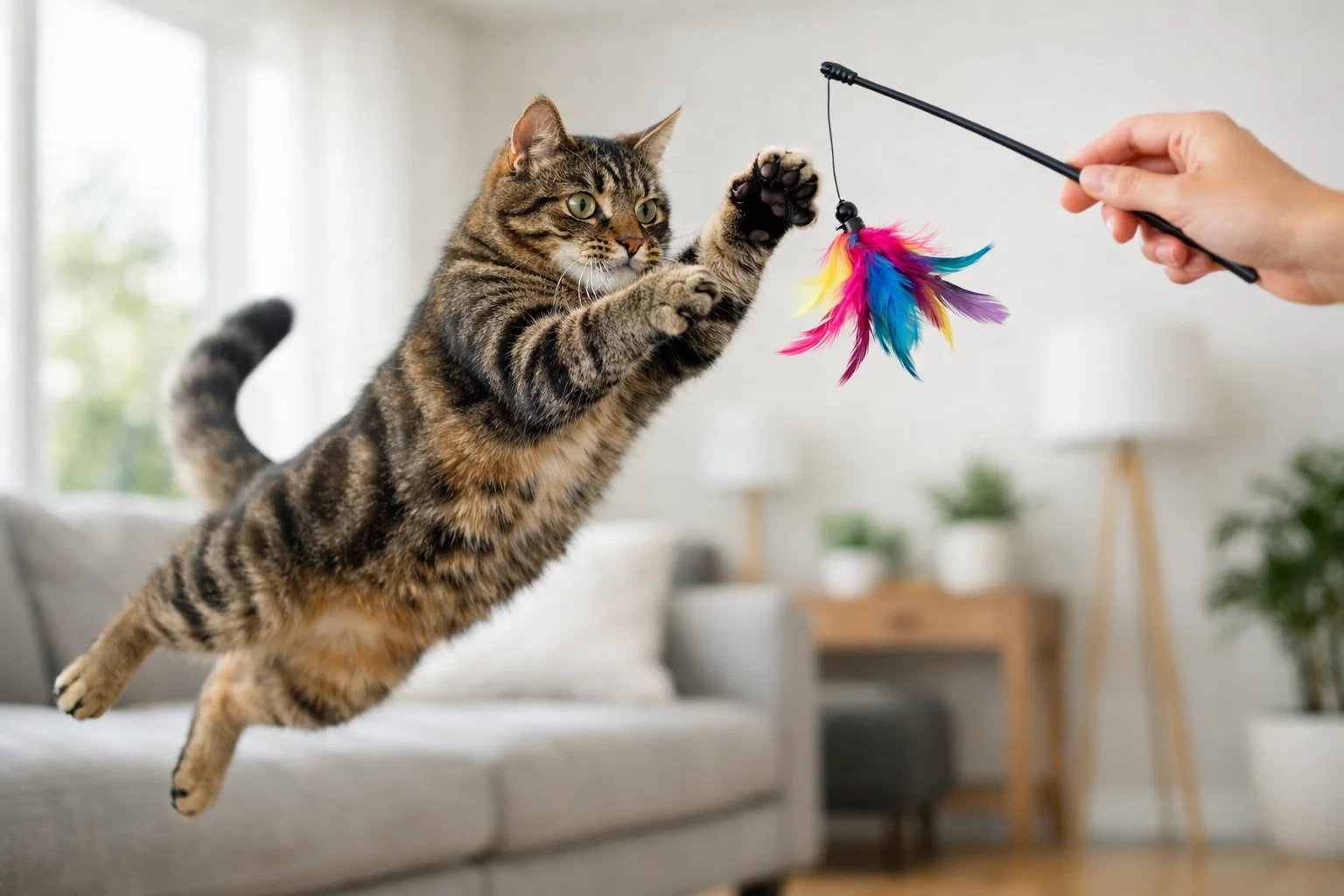
Wand toys with feathers or fabric tails are one of the most effective enrichment tools available. They let your cat hunt in a controlled way without any real prey involved. Aim for two 10 to 15 minute play sessions per day. Rotate toy types so your cat does not lose interest. The movement matters more than the toy itself. Drag the toy along the floor, flick it behind furniture, and let your cat catch it occasionally so they feel successful.
2. Window Perches and Bird Feeders
Placing a sturdy perch near a window gives your cat visual stimulation for hours. Set up a bird feeder or bird bath outside that window and the effect doubles. Cats will watch birds and squirrels with intense focus. This is sometimes called cat TV. It requires almost no effort on your part but delivers real mental engagement for your cat.
3. Puzzle Feeders and Food Toys
Instead of placing food in a bowl, try making your cat work for it. Puzzle feeders are containers with holes or compartments that require your cat to bat, roll, or paw at food to release it. This slows eating, reduces overeating, and gives your cat a mental challenge with every meal. You can buy purpose-built puzzle feeders or make simple versions from muffin tins and tennis balls.
4. Cat Trees and Vertical Spaces
Cats feel safer when they can see their territory from above. A tall cat tree placed near a window or in a busy room gives your cat a safe high spot to observe. Multi-level trees also encourage climbing, which is good exercise. If you have limited space, wall-mounted shelves arranged in a staircase pattern work just as well.
5. Scent Enrichment
Scent is one of the most underused tools in cat enrichment. Try rubbing a paper bag with dried herbs like valerian, silver vine, or catnip. You can also place a few drops of diluted essential oils safe for cats on a cloth and let your cat investigate it. Rotating scents prevents habituation. A new smell creates a mini investigation session for your cat, which is mentally stimulating and calming at the same time.

6. Cardboard Boxes and Paper Bags
You do not need to spend money to enrich your cat. An empty cardboard box or a paper shopping bag with the handles removed will entertain most cats for a solid stretch of time. Cats love to hide, ambush, and scratch cardboard surfaces. Leave a few boxes open in different rooms and let your cat choose when and how to use them. Replace them when they get worn down.
7. Leash Training for Outdoor Walks
Some cats adapt well to walking on a harness and leash. Outdoor time, even brief, exposes them to fresh air, natural smells, and sights that no indoor setup can fully replicate. Start harness training slowly and only move to outdoor walks once your cat is completely relaxed indoors with the harness on. Not every cat will accept this, and that is fine. But for cats that do, it becomes a regular highlight of their day.
8. DIY Foraging Activities
Hide small portions of your cat’s dry food around the house before a meal. Let them sniff it out across a few rooms. This mirrors the foraging behavior cats would use in the wild. It adds movement and mental engagement to a daily activity that is usually passive. You can make this harder or easier depending on how food motivated your cat is.
9. Cat-Safe Plants
Adding cat-safe plants to your home gives your cat something living to interact with. Cat grass, spider plants, and catnip are popular options. Cats will sniff, bat, and sometimes chew on plants. Always verify safety before placing any plant near your cat, as many common houseplants are toxic. The ASPCA maintains a comprehensive list of safe and toxic plants you can use as a reference.
10. Social and Training Enrichment
Cats can learn. Short, positive training sessions using treats teach your cat to sit, high five, or come when called. Training sessions last only two to three minutes but deliver strong mental stimulation. The interaction itself also builds your bond and gives your cat a structured activity. This type of enrichment is especially useful for young, energetic cats who need more than physical play.
Signs Your Cat Needs More Enrichment
Watch for these behaviors as signals that your cat needs more mental and physical activity.
- Excessive vocalization at odd hours
- Over-grooming or bald patches from licking
- Destructive scratching on furniture
- Sudden aggression toward people or other pets
- Lethargy or weight gain without a medical cause
- Eating too fast or begging for food constantly
If any of these sound familiar, start with one or two new enrichment activities and give your cat a week to adjust. You will likely see a shift in mood and behavior within a short time.
How to Build an Enrichment Routine
Consistency matters more than variety. Pick two or three enrichment activities and introduce them into your cat’s daily schedule. Morning interactive play, a puzzle feeder at lunch, and an evening foraging session is a simple starting routine that covers physical, mental, and sensory enrichment without overwhelming you or your cat.
Rotate toys and activities every week or two to keep things fresh. Cats do habituate to the same stimulus over time. What excites them in week one may become background noise by week four. Keeping a small rotation of options prevents this.

Recommended Products for Indoor Cat Enrichment
At PupzCorner, we carry a range of cat accessories designed with your cat’s daily comfort and engagement in mind. Browse our cat products and accessories to find puzzle feeders, interactive toys, and more that suit your cat’s personality and age.
When choosing enrichment tools, look for items that are easy to clean, sized correctly for your cat, and made from non-toxic materials. Avoid small parts that could be swallowed and always supervise new toys in the first few sessions.
What Veterinarians Say About Enrichment
The American Association of Feline Practitioners (AAFP) recommends environmental enrichment as a core part of feline preventive care. Their guidelines emphasize that indoor cats require daily stimulation to maintain normal behavior patterns and prevent stress-related illness. Many behavioral problems seen in indoor cats, including litter box avoidance and intercat aggression, have been directly linked to insufficient enrichment.
Your vet is a good resource if you are unsure where to start or if your cat is already showing signs of stress. A brief behavioral consultation can help you identify which type of enrichment will benefit your specific cat most.
Indoor Cat Enrichment for Different Life Stages
Kittens (Under 1 Year)
Kittens need high-energy interactive play multiple times a day. Wand toys, tunnels, and chase toys work best. Limit solo play with small toys that could be swallowed. Focus on variety and short, frequent sessions rather than long ones.
Adult Cats (1 to 7 Years)
Adult cats benefit from a balanced mix of physical play and mental stimulation. Puzzle feeders, clicker training, and foraging activities work well alongside regular wand toy sessions. Two structured play sessions per day is a solid baseline.
Senior Cats (7 Years and Up)
Older cats still need enrichment but at a lower intensity. Scent enrichment, gentle wand play, and window watching are ideal. Avoid activities that require jumping if your cat has joint issues. Keep sessions shorter and watch for signs of fatigue.
A Quick Note on Multi-Cat Households
In homes with more than one cat, enrichment becomes even more important. Competition for resources causes stress. Make sure each cat has its own feeding station, resting spot, and access to enrichment activities. Vertical space is especially useful in multi-cat homes because it gives each cat a territory without requiring more floor space.
If you want more ideas on setting up a comfortable space for your cats at home, our pet care articles cover a range of topics from feeding guides to behavior tips.
Final Thoughts
Indoor cat enrichment does not require an expensive setup or hours of your time. Small, consistent changes to your cat’s daily routine make a real difference. A window perch here, a puzzle feeder there, and a daily play session add up to a healthier, calmer, and happier cat over time.
Start with one idea from this list this week. Watch how your cat responds. Most cat owners are surprised by how quickly even simple changes improve their cat’s mood and behavior. Your cat depends on you to create a stimulating environment because they cannot go out and find it themselves.
FAQs About Indoor Cat Enrichment
- How often should I provide enrichment activities for my indoor cat?
Cats benefit from daily enrichment. Aim for at least two interactive play sessions per day, along with passive enrichment like window watching or puzzle feeders. Consistency matters more than variety. - Can indoor cats really be happy without going outside?
Yes, indoor cats can live happy and healthy lives if their environment meets their physical and mental needs. Proper enrichment helps replace the stimulation they would naturally get outdoors. - What are the best toys for indoor cat enrichment?
The most effective toys are those that mimic hunting behavior. Wand toys, puzzle feeders, and interactive motion toys tend to work best because they engage your cat’s instincts to chase and pounce. - How do I know if my cat is bored or understimulated?
Common signs include excessive meowing, destructive scratching, over-grooming, aggression, or sudden weight gain. These behaviors often improve once enrichment activities are introduced. - Are DIY enrichment activities as effective as store-bought products?
Absolutely. Simple items like cardboard boxes, paper bags, and hidden food games can be just as engaging as commercial toys. The key is how the activity stimulates your cat’s natural instincts.