
Cat Grooming Tips: A Complete At-Home Guide for Pet Owners
Cats are known for being clean animals. They spend a good part of their day licking their fur and keeping themselves tidy. But self-grooming only goes so far. A regular grooming routine from you as the owner makes a real difference to your cat’s coat health, skin condition, and overall comfort.
The good news is that cat grooming tips are not complicated to follow. With the right tools and a calm approach, you can handle most grooming tasks at home without needing a professional salon every month. This guide covers everything you need to know, from brushing and bathing to nail trimming and ear cleaning.
Why Regular Cat Grooming Matters
Many cat owners skip grooming because their cat seems to manage on its own. That works to a point, but it overlooks several important benefits that regular grooming provides.
First, brushing removes loose fur before your cat can swallow it. Cats that groom themselves swallow a lot of hair, which can form hairballs in the stomach. Hairballs are uncomfortable and can sometimes cause blockages. Regular brushing reduces how much fur your cat ingests during self-cleaning.
Second, grooming gives you the chance to check your cat’s body up close. You will notice lumps, scratches, skin irritation, fleas, or any changes that need a vet’s attention early on. This kind of hands-on check is something a quick pat on the head simply does not provide.
Third, grooming builds a bond between you and your cat. Cats that are handled gently from a young age become more relaxed and trusting over time. Grooming can become a quiet ritual both of you look forward to as part of the week.

How to Brush Your Cat the Right Way
Brushing is the foundation of any cat grooming routine. How often you brush depends on your cat’s coat type.
Short-Haired Cats
Short-haired cats generally need brushing once or twice a week. A rubber grooming mitt or a soft bristle brush works well for these cats. Run the brush in the direction of the fur growth, starting from the head and moving toward the tail. Pay extra attention to the area around the neck and behind the ears, where tangles can quietly develop.
Long-Haired Cats
Long-haired breeds like Maine Coons, Persians, and Ragdolls need daily brushing to prevent tangles and mats from forming. Use a wide-tooth comb first to work through any knots, then follow with a slicker brush to smooth the coat. Never yank through a mat. Instead, hold the base of the fur and work through the knot slowly from the tip upward, a little at a time.
If a mat is too tight to brush out, use blunt-tipped scissors or a mat splitter. Serious matting may require a professional groomer, especially if it covers a large area or sits close to the skin.
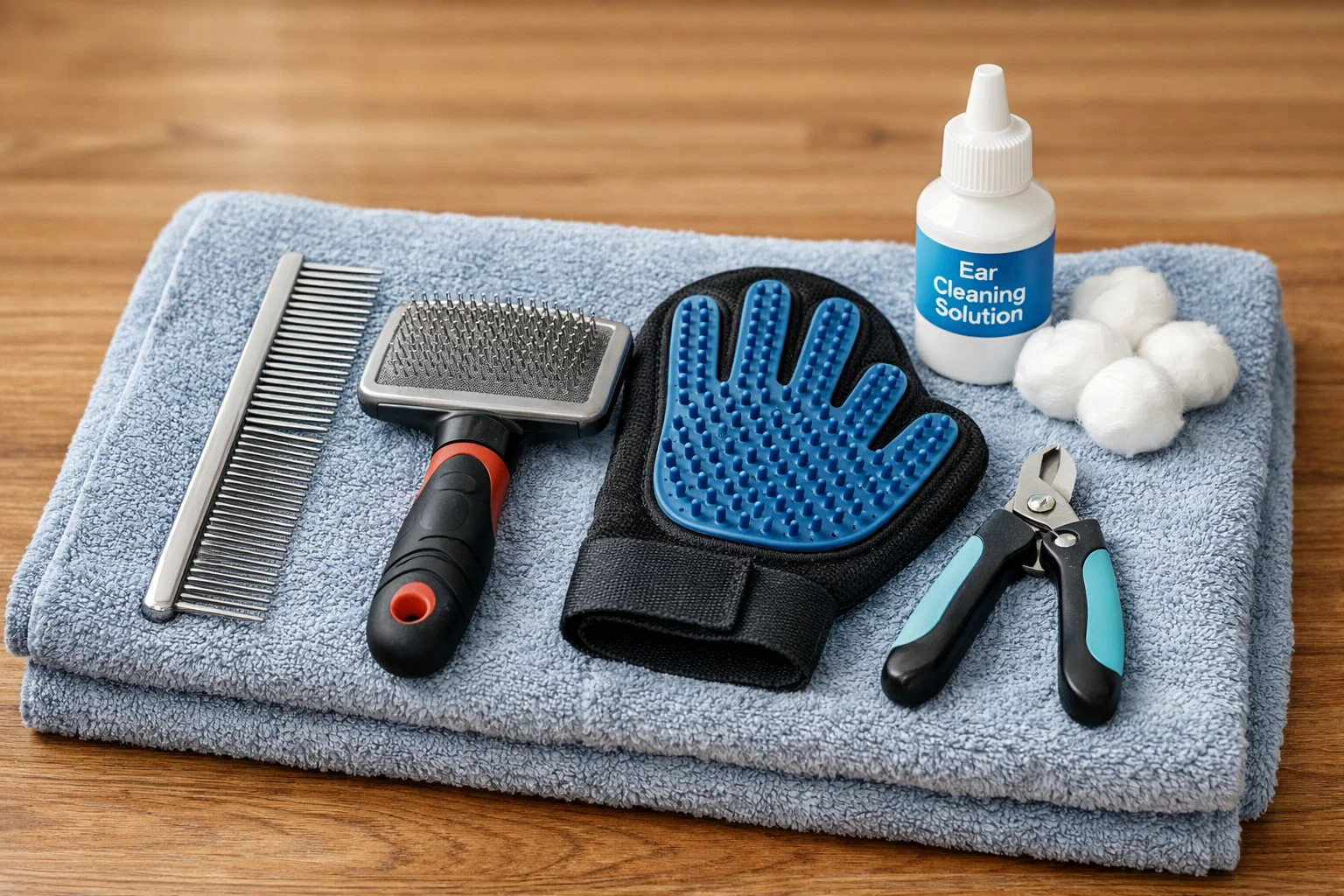
Essential Cat Grooming Tools Every Owner Should Have
You do not need a huge collection of products to groom your cat well. A few good-quality tools cover most of what you need day to day.
Slicker Brush: Good for removing loose fur from medium to long coats. The fine wire bristles reach through the top coat to the undercoat where shedding hair collects.
Wide-Tooth Comb: Ideal for detangling before brushing. Works especially well on longer fur and around sensitive areas like the belly and legs.
Rubber Grooming Mitt: A gentle option for short-haired cats or cats that are sensitive to traditional brushes. It fits over your hand and mimics a natural petting motion.
Cat Nail Clippers: Specially designed clippers with a curved blade are safer and more precise than scissors or human nail clippers.
Ear Cleaning Solution: A vet-approved solution used with cotton balls is all you need for routine ear care at home.
Cat-Specific Shampoo: If you bathe your cat, always use a shampoo formulated for cats. Human shampoo disrupts the natural pH balance of cat skin and can cause irritation.
You can find a solid selection of quality grooming accessories at PupzCorner’s pet shop, where products are chosen with pet safety and everyday practicality in mind.
Trimming Your Cat’s Nails Without the Stress
Nail trimming is the task cat owners tend to avoid most. With a little preparation and patience, it becomes much more manageable.
Start by getting your cat comfortable with having its paws touched. Do this gradually over several short sessions before you attempt any trimming. Gently hold the paw, press the pad to extend the nail, and let go. Offer a small treat afterward. Repeat this a few times each day until your cat no longer pulls away reflexively.
When you are ready to trim, hold the cat in your lap or have someone else gently hold the cat while you work. Extend one nail at a time. You will see a clear section of the nail and a pink area inside called the quick. Only cut the clear tip, staying well away from the quick. Cutting into the quick causes pain and bleeding.
Trim one or two nails per session at first if your cat becomes restless. Over time, most cats learn to tolerate a full trim in one sitting.
Keeping Your Cat’s Ears Clean and Healthy
Healthy cat ears are light pink on the inside and have no strong smell. You only need to clean them when you notice dark debris, mild odor, or visible dirt building up near the opening.
Apply a few drops of vet-approved ear cleaning solution to a cotton ball. Gently wipe the visible inner parts of the ear, staying within the area you can see clearly. Never push anything down into the ear canal. If you notice very dark or crumbly debris or a strong unpleasant smell, this can indicate ear mites or infection. A vet visit is the right call in that case rather than home cleaning.
Checking your cat’s ears once a week as part of your grooming routine means you catch any problems early before they become serious.

Bathing Your Cat: When and How to Do It
Most cats do not need regular baths. They are efficient self-groomers and generally stay clean without water. However, there are times when a bath is helpful. Examples include when a cat gets into something dirty or sticky, has been treated for fleas, or has a skin condition requiring medicated shampoo.
Use a sink or small tub with comfortably warm water. Never use hot water. Wet your cat’s coat slowly and carefully, keeping water away from the face, eyes, and ears. Apply cat shampoo and work it gently into the coat with your fingers. Rinse thoroughly because any shampoo left behind will irritate the skin over time.
Wrap your cat in a dry towel straight after and keep it somewhere warm until the coat dries fully. Most cats dislike the noise and heat of blow dryers, but if yours tolerates it, use the lowest heat setting held at a comfortable distance from the coat.
A Note on Cat Dental Hygiene
Grooming goes beyond the coat and nails. Cat dental hygiene is something many owners overlook, even though it has a direct impact on overall health. Dental disease is one of the most common health issues in adult cats, and it starts with plaque slowly building up on the teeth.
You do not need to brush your cat’s teeth every single day, but doing it two to three times a week makes a measurable difference. Use a soft-bristled toothbrush designed for cats along with cat-safe toothpaste only. Human toothpaste contains fluoride, which is toxic to cats and should never be used.
If brushing is not possible, dental treats and water additives made for cats help reduce plaque. According to the ASPCA’s general cat care guidelines, regular dental care is an important part of preventive health for cats, and the earlier you start building these habits, the easier they become to maintain.
Grooming Older and Senior Cats
Senior cats sometimes struggle to groom themselves as thoroughly as they once did. Arthritis and reduced flexibility make it harder for older cats to reach certain parts of their body. As an owner, you may need to take on a larger share of the grooming work as your cat ages.
Be gentle with older cats. Their skin can be more delicate and their joints more tender than a younger cat’s. Keep grooming sessions short and calm. If your senior cat has developed mats that are painful or extensive, a professional groomer experienced with older animals can handle it without adding unnecessary stress to the process.
Pay extra attention to the area around the hindquarters in senior cats. This is one of the spots they find it hardest to clean properly on their own as they age.
Final Thoughts
Good cat grooming tips are simple to apply once you understand the basics. Start with a consistent brushing schedule, add nail trimming and ear checks into your weekly routine, and approach each session with calm and patience. Your cat may resist at first, but with time, grooming becomes an accepted and even comfortable part of the week for both of you.
The benefits are real and ongoing. A well-groomed cat has healthier skin, a cleaner coat, fewer hairballs, and the quiet sense of comfort that comes from regular care. As a pet owner, building that routine is one of the most direct things you can do to support your cat’s wellbeing every single week.
For more helpful guides on cat care, nutrition, and accessories, visit the PupzCorner Articles section and explore tips written with your pet’s health in mind.
Frequently Asked Questions About Cat Grooming
How often should I groom my cat?
Short-haired cats benefit from brushing once or twice a week. Long-haired cats generally need daily brushing to prevent mats. Nail trimming every two to four weeks is usually enough for most indoor cats.
My cat hates being groomed. What should I do?
Start very slowly. Introduce grooming tools gradually. Let your cat sniff and investigate the brush before you ever use it. Keep early sessions extremely short and always end on a positive note with a treat, gentle play, or affection. Rushing the process tends to make things worse.
Should I take my cat to a professional groomer?
Most routine grooming can be handled at home. A professional groomer is worth considering for severe matting, for cats with strong anxiety that makes home grooming very difficult, or for specific services like a full coat trim on a long-haired cat.
Is it safe to use human shampoo on my cat?
No. Human shampoo is formulated for a different skin pH and will dry out or irritate your cat’s skin. Always use a shampoo made specifically for cats.