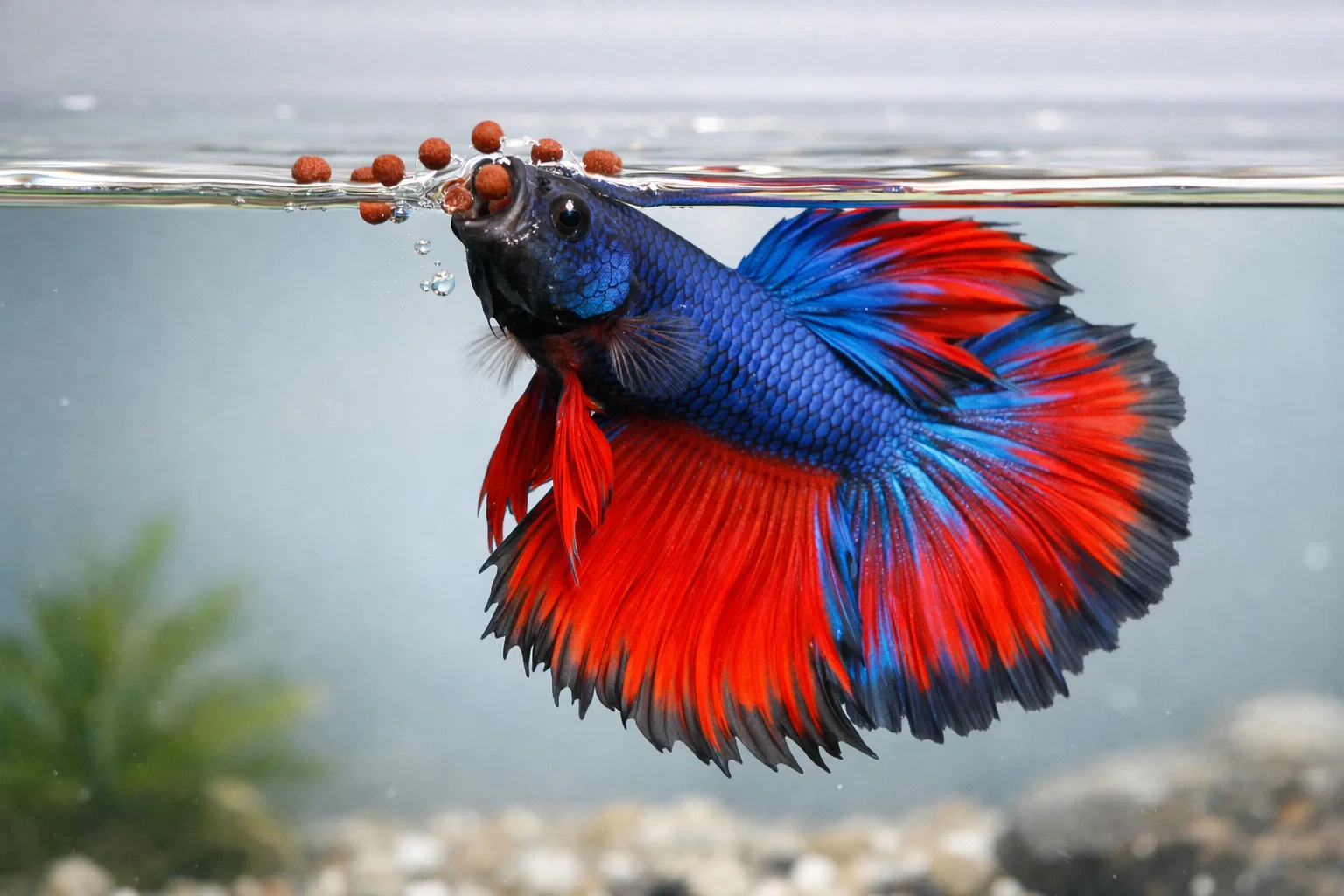

Betta fish food must meet very different nutritional needs than food made for community or herbivorous fish. Bettas, also known as Siamese fighting fish, are carnivores. Their digestive system is short and designed to process protein-rich diets, not plant-heavy formulas or filler-based flakes.
The best food for betta fish is a high-protein, species-specific diet that mimics what they eat in the wild. This usually means floating pellets made for bettas, supported by occasional live or frozen foods. Feeding incorrectly leads to common problems such as bloating, lethargy, constipation, and poor coloration. This guide explains how to choose the right betta fighting fish food, how often to feed, and what to avoid to keep bettas healthy long term.
Why Proper Betta Fish Food Is Critical for Health
Bettas are often misunderstood as low-maintenance fish, but their diet plays a direct role in survival and behavior. Because bettas lack the ability to digest complex plant matter efficiently, low-quality or incorrect food causes digestive blockages and internal stress.
Poor feeding is one of the main causes of bloating and swim bladder issues in betta fish. Over time, improper nutrition weakens immunity, reduces activity, and shortens lifespan. Water quality also suffers when uneaten food breaks down, which increases ammonia levels in small tanks where bettas are commonly kept.
Veterinary-backed aquatic care resources such as PetMD and The Spruce Pets consistently emphasize feeding bettas high-protein, portion-controlled meals. Correct betta fish food supports muscle development, fin health, vibrant color, and normal aggressive-free behavior.
Understanding the Natural Diet of Betta Fish
In the wild, bettas feed on insects and insect larvae near the water surface. Their diet includes mosquito larvae, small crustaceans, and zooplankton. This explains why betta fish food must be protein-focused and why floating foods work better than sinking options.
Commercial betta fighting fish food is formulated to replicate this diet. High-quality pellets contain fish meal, shrimp meal, or insect-based proteins that are easy to digest. Foods high in wheat, soy, or corn provide little nutritional value to bettas and often lead to constipation.
Because bettas are surface feeders, floating pellets allow them to eat naturally without gulping excessive air or searching the bottom of the tank, which reduces stress.
Types of Betta Fish Food Explained
Choosing the correct form of betta fish food matters just as much as the ingredients.
Betta Pellets
Pellets are the most reliable daily food for bettas. They retain nutrients, allow precise portion control, and float long enough for surface feeding. A species-specific option like Betta Micro Floating Pellet Food – 3 Pack is designed to match betta mouth size and protein needs.
Frozen and Live Foods
Frozen bloodworms, brine shrimp, and daphnia provide enrichment and protein variety. These foods should be offered one to two times per week, not daily, to avoid digestive overload.
Natural Tank Supplements
While not a food source, natural conditioning items such as Indian Almond Leaves improve water quality and mimic natural habitats. Healthier water supports appetite, digestion, and stress reduction in bettas.
Feeding Schedule: How Much and How Often to Feed Bettas
Bettas require small, controlled meals. Adult bettas should be fed once or twice daily, with each feeding limited to two to four pellets, depending on pellet size. Bettas have small stomachs roughly the size of their eye, making overfeeding a frequent mistake.
A common question among owners is how long can betta fish go without food. Healthy adult bettas can survive several days without eating, and in some cases up to one week. This is sometimes useful during short trips. However, frequent fasting weakens immunity and reduces energy.
Related questions such as how long can a betta fish go without food or how long does a betta fish live without food all point to the same principle. Bettas tolerate short gaps but thrive on consistent, moderate feeding. Skipping meals should never replace proper daily care.
Occasional fasting days, once every one to two weeks, are sometimes recommended by aquatic professionals to reduce bloating and reset digestion.
Can Bettas Eat Goldfish Food?
Many new owners ask do betta fish eat goldfish food. While bettas may consume it, goldfish food is not appropriate for long-term feeding. Goldfish food is lower in protein and higher in plant-based fillers, which bettas cannot digest efficiently.
Feeding goldfish food to bettas can cause bloating, lethargy, and nutrient deficiencies. It should only be used in emergencies when no other option is available. Likewise, can goldfish eat betta fish food is also problematic, as the high protein content of betta food can harm goldfish digestion.
Species-specific diets exist for a reason. Feeding bettas food designed for bettas prevents most diet-related health issues.
Best Food for Betta Fish: What to Choose and Why
The best food for betta fish is one that delivers concentrated protein without unnecessary fillers. Bettas thrive on diets built around animal-based ingredients such as fish meal, shrimp meal, and insect protein. Foods that rely heavily on grains or plant byproducts do not meet their biological needs.
Floating pellets formulated specifically for bettas are the most reliable daily option. They allow surface feeding, reduce waste, and provide consistent nutrition. Products like Betta Micro Floating Pellet Food – 3 Pack are designed to match betta mouth size and feeding behavior, helping prevent overfeeding and digestive stress.
Occasional supplementation with frozen or live foods improves enrichment. Bloodworms, brine shrimp, and daphnia stimulate natural hunting behavior and support muscle tone. These foods should be limited to one or two feedings per week to avoid excessive fat intake.
Veterinary-backed resources such as PetMD emphasize that consistency matters more than variety. A stable, high-quality base diet supports longer lifespan and fewer health complications.

Supporting Digestion and Water Quality in Betta Tanks
Betta health is closely tied to water quality. Even the best betta fish food can cause problems if waste accumulates or digestion slows. Small tanks amplify these risks, which is why supportive conditioning tools matter.
Natural additives such as Indian Almond Leaves release tannins that help lower stress, support immune response, and improve digestion indirectly. These leaves also mimic natural environments bettas evolved in, encouraging normal behavior and appetite.
Another supportive option is Aqueon Pure Betta Beads – Purple. While not a food, these beads help condition water and reduce organic waste buildup. Cleaner water allows bettas to process food more efficiently and reduces the risk of bloating and lethargy.
According to guidance from The Spruce Pets, maintaining stable water parameters is just as important as feeding the right food. Nutrition and environment work together, not separately.

Common Betta Feeding Mistakes and How to Fix Them
Most betta health problems linked to food come from a few repeated mistakes.
Overfeeding is the most common issue. Bettas do not stop eating when full. Excess food leads to bloating, constipation, and rapid water pollution. The solution is strict portion control and consistent feeding times.
Using the wrong food causes long-term damage. Goldfish or tropical fish food lacks the protein balance bettas require. This leads to dull coloration, low energy, and weakened immunity.
Feeding too often strains digestion. Bettas benefit from one controlled meal per day, with an optional second small feeding if activity level is high.
Ignoring fasting periods can worsen bloating. A short fasting day once every one to two weeks helps reset digestion when used responsibly.
Preventing these issues through correct feeding is far more effective than treating symptoms later.
How Long Can Betta Fish Live Without Food?
Questions such as how long can betta fish go without food, how long can a betta fish go without food, and how long does a betta fish live without food are common among owners planning short absences.
Healthy adult bettas can survive three to five days without food, and in some cases up to one week. This tolerance comes from their ability to slow metabolism temporarily. However, survival is not the same as thriving. Repeated or extended fasting weakens immune response and reduces lifespan.
Short fasting periods are sometimes used intentionally to relieve digestive stress, but they should be planned and infrequent. Automatic feeders or pre-measured feeding plans are safer options for longer absences.
Can Goldfish Eat Betta Fish Food?
The question can goldfish eat betta fish food highlights why species-specific diets matter. Goldfish are omnivores with long digestive tracts. Betta food is protein-dense and designed for carnivorous digestion.
When goldfish eat betta food regularly, they struggle to process the excess protein. This leads to increased waste, ammonia spikes, and digestive imbalance. While a single feeding is unlikely to cause harm, long-term cross-feeding should be avoided.
Feeding each species the food designed for its biology prevents avoidable health and water quality issues.
Conclusion: Feeding Bettas for Long-Term Health
Betta fish food is not interchangeable with general aquarium diets. Bettas require protein-rich, species-specific food fed in controlled portions to stay healthy. Choosing the right pellets, supplementing responsibly, and supporting digestion through clean water practices prevents most common betta health problems.
When feeding is done correctly, bettas show stronger coloration, better fin condition, normal activity levels, and longer lifespans. Proper nutrition is not complicated, but it must be intentional.
Frequently Asked Questions About Betta Fish Food
How long can betta fish go without food?
Healthy adult betta fish can usually survive three to five days without food, and sometimes up to one week. Short fasting periods are tolerated, but frequent or extended gaps weaken immunity and reduce lifespan.
How long can a betta fish live without food?
A betta fish may survive for several days without eating, but survival does not mean good health. Regular, controlled feeding is essential for maintaining energy, digestion, and long-term wellbeing.
What is the best food for betta fish?
The best food for betta fish is a high-protein, species-specific diet such as floating betta pellets. These foods are designed for carnivorous digestion and help prevent bloating and nutrient deficiencies.
Do betta fish eat goldfish food?
Betta fish may eat goldfish food, but it is not suitable for regular feeding. Goldfish food contains more plant matter and less protein, which can cause digestive problems in bettas.
Can goldfish eat betta fish food?
Goldfish should not eat betta fish food regularly. Betta food is high in protein and can overwhelm goldfish digestion, leading to waste buildup and water quality issues.